How to Fix Windows Update Error 0x800f0922? 7 Proven Ways

5 mins read

Updated on 2026-09-16 18:53:55 to Windows Fix

The windows update error 0x800f0922 typically occurs when your EFI System Partition lacks free space or essential .NET Framework components are disabled. This article outlines effective methods, from partition expansion to command-line system repairs to get your updates back on track seamlessly. Check the quick overview table below to find the fastest fix, or jump straight to the detailed steps below.

  • Troubleshooting Method
  • Target Cause

Part 1: What Causes Windows Update Error 0x800f0922?

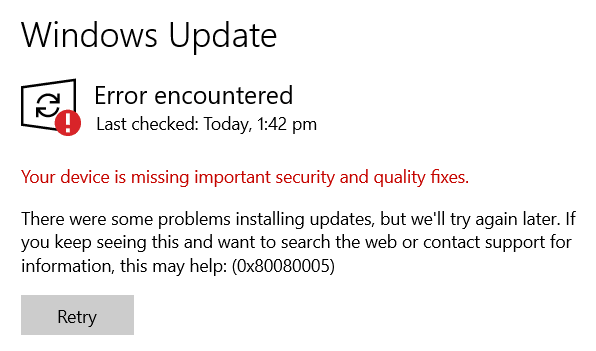
Windows install error - 0x800f0922 is an update execution failure code returned by the Windows Servicing Stack. It indicates that the system initiated a cumulative update or feature upgrade but could not successfully apply the changes or write critical bootloader files to disk.

install error 0x800f0922

⚠ Common Causes of Install Error - 0x800f0922:

  • Insufficient EFI / System Reserved Partition Space: Cumulative updates write updated bootloader files and Secure Boot DBX revocation lists to the EFI System Partition (ESP). If the ESP has less than 30–50 MB of free space, the installation fails immediately.
  • Corrupted Windows Update Cache or Components: Damaged temporary files stored in the SoftwareDistribution or Catroot2 folders stall the update engine.
  • System File Corruption: Damaged core system binaries prevent the Windows Servicing Stack from substituting updated files.
  • Package or KB Compatibility Issues: Specific cumulative updates (such as recent Windows 11 24H2 builds) may conflict with existing system configurations.
  • VPN, Proxy, or Network Restrictions: Active VPN connections or proxy servers block communication with Microsoft update verification servers.
  • Antivirus and Background Service Interference: Third-party security programs or locked background tasks may block update installers from writing system files.
  • Disabled .NET Framework Features: Missing or disabled .NET Framework 3.5/4.8 dependencies can cause specific update routines to terminate unexpectedly.

How to Fix Windows Update Error - 0x800f0922?

Method 1: Run the Windows Update Troubleshooter

Start with Windows' built-in diagnostic tool to resolve simple update service glitches automatically.

  • Press Win + I to open Settings, then navigate to System > Troubleshoot > Other troubleshooters.

  • Locate Windows Update and click Run.

    run windows update troubleshooter
  • Allow the troubleshooter to apply automated fixes, restart your computer, and check for updates again.

Method 2: Disable VPN, Proxy Settings, and Third-Party Antivirus

Network interference can block Secure Boot revocation list updates and server handshakes, leading to 0x800f0922 windows update errors.

  • Disconnect VPNs: Turn off any active VPN connections or network boosters.

  • Turn Off Proxy: Go to Settings > Network & internet > Proxy and switch off Use a proxy server.

  • Disable Antivirus: Temporarily pause real-time protection in third-party antivirus software.

    disable real-time protection
  • After that, retry running Windows Update.

Method 3: Repair Windows Image and System Files (DISM & SFC)

If damaged system files are causing update failures, use Deployment Image Servicing and Management (DISM) and System File Checker (SFC) to repair them.

  • Press Win + S, type cmd, right-click Command Prompt, and choose Run as administrator.

  • Execute the DISM repair command:

    $ DISM.exe /Online /Cleanup-image /Restorehealth
  • After DISM finishes, run the SFC scan:

    $ sfc /scannow
  • Restart your system after the verification reaches 100% and test updating again.

Method 4: Reset Windows Update Components

Clearing corrupted update cache files forces Windows to rebuild update services and download fresh installation files, resolving error 0x800f0922.

  • Open Command Prompt as Administrator.

  • Stop the core Windows Update services by running the following commands:

    $net stop wuauserv
    $net stop cryptSvc
    $net stop bits
    $net stop msiserver
  • Clear the cache directory by navigating to C:\Windows\SoftwareDistribution in File Explorer and deleting all items inside the Download and DataStore folders.

  • Restart the update services in Command Prompt:

    $net start wuauserv
    $net start cryptSvc
    $net start bits
    $net start msiserver
  • Reopen Settings > Windows Update and click Check for updates. Allow Windows to download the pending update, then click Restart now to complete the installation.

After rebooting, confirm the status displays "You're up to date". If error 0x800f0922 persists, proceed to next method to expand your EFI system partition.

Method 5: Check and Extend the EFI/System Reserved Partition

The most frequent technical root cause of windows update error 0x800f0922 is an undersized EFI System Partition (ESP). If your ESP partition is low on storage (under 50 MB), Windows cannot copy essential boot binaries during restart.

While native Windows Disk Management often disables partition expansion when unallocated space is non-adjacent, using 4DDiG Partition Manager enables you to easily reallocate partition space and expand the ESP safely without data loss.

FREE DOWNLOAD

Secure Download

  • Install and launch 4DDiG Partition Manager on your PC. Select Partition Management from the left navigation panel.

  • Locate your EFI partition, and choose Resize/Move.

    locate efi partition
  • Drag the partition handles to create unallocated space, then extend your EFI System Partition into the newly freed space (target size: 500 MB).

    resize efi partition
  • Click Execute 1 Task(s) in the bottom right corner to apply the partition changes safely without touching your personal files.

    r
  • Reboot your PC and run Windows Update again.

Method 6: Enable .NET Framework 3.5 Features

If the error 0x800f0922 occurs during a cumulative update that relies on .NET Framework dependencies, turning on .NET Framework 3.5 manually can resolve the installation block.

  • Press Win + R to open the Run dialog box, type appwiz.cpl, and press Enter.

  • In the left sidebar, click Turn Windows features on or off.

  • Check the box next to .NET Framework 3.5 (includes .NET 2.0 and 3.0) and .NET Framework 4.8 Advanced Services.

  • Click OK, and select Let Windows Update download the files for you when prompted.

Once the process completes, restart your computer and retry the Windows Update.

Method 7: Install the Failed Update Manually

If automated update channels continue to stall, bypass the Windows Update client by downloading and installing the offline update package manually.

  • Go to Settings > Windows Update > Update history and copy the failing KB number (e.g., KB5129195).

  • Open your browser and navigate to the Microsoft Update Catalog. Enter the KB number into the search bar.

  • Download the .msu installer matching your system architecture (x64 or ARM64).

    r
  • Double-click the downloaded .msu package to execute the offline update, then reboot your system when prompted.

Final Thoughts

In short, resolving the Windows update error 0x800f0922 is essential for a smooth and hassle-free update experience. By understanding the possible causes of the error, implementing the above-proven solutions, and utilizing tools like 4DDiG Partition Manager, you can overcome the error and keep your Windows system up to date.

No doubt, updating your Windows operating system is critical for security, reliability, and access to the most recent features. You can have an optimized and dependable computing experience by spending time and effort resolving the install error - 0x800f0922.

William Bollson (senior editor)

William Bollson, the editor-in-chief of 4DDiG, devotes to providing the best solutions for Windows and Mac related issues, including data recovery, repair, error fixes.

(Click to rate this post)

You rated 4.5 ( participated)