How to Fix Windows Resource Protection Found Corrupt Files | 4 Fixes

5 mins read

Updated on 2026-07-10 10:28:29 to Corrupted File Repair

Running the System File Checker is usually the first step when Windows starts behaving unexpectedly, but seeing the message about Windows Resource Protection found corrupt files can leave you wondering what to do next.

In many cases, the problem is fixable without reinstalling Windows. This step by step guide explains what the message means, why it appears, and the most effective ways to repair corrupted system files using DISM, SFC, CBS.log analysis, and other proven troubleshooting methods.

What Does “Windows Resource Protection Found Corrupt Files” Mean?

The System File Checker (SFC) is a built-in Windows utility that scans protected operating system files for corruption or unauthorized changes. When you run the sfc scannow command, Windows Resource Protection (WRP) checks these critical files against known good copies stored in the system.

If corruption is detected, Windows attempts to replace the damaged files automatically. Depending on the scan results, you’ll receive one of several status messages.

  • SFC Result
  • Meaning
  • Windows Resource Protection did not find any integrity violations.
  • No corrupted or missing protected system files were detected. Your Windows installation appears healthy.
  • Windows Resource Protection found corrupt files and successfully repaired them.
  • Corrupted system files were detected and repaired automatically. Restart your computer to ensure the changes take effect.
  • Windows Resource Protection found corrupt files but was unable to fix some of them.
  • Windows repaired some files, but couldn't repair all of them. Additional troubleshooting, such as running DISM or checking the CBS.log file, is usually required.
  • Windows Resource Protection could not perform the requested operation.
  • The scan couldn’t complete, often because of disk errors, file system issues, or interference from other processes. Running SFC in Safe Mode or using CHKDSK may help.

If you receive a Windows Resource Protection error that says corrupt files, don’t panic. It doesn’t necessarily mean Windows is severely damaged, only that one or more protected system files need attention.

What Causes “Windows Resource Protection Found Corrupt Files” Error?

Several issues can cause resource protection to find corrupt files during an SFC scan. Identifying the underlying cause makes it easier to choose the right fix.

The common causes include:

  • Unexpected system shutdowns: Power failures or forced shutdowns can interrupt file operations and leave system files corrupted.
  • Faulty Windows updates:
  • A failed or incomplete Windows update may replace only part of a system component, causing integrity errors.
  • Hard drive or SSD problems: Bad sectors and storage failures can damage Windows system files over time.
  • Malware infections: Some viruses modify or replace protected Windows files, triggering integrity violations during an SFC scan.
  • Corrupted Windows component store: Since SFC relies on the Windows component store to repair files, corruption there prevents successful repairs.
  • File system errors: Logical errors on the drive can interfere with Windows’ ability to read protected files correctly.
  • Third-party software conflicts: Certain system optimization tools or low-level utilities may unintentionally alter protected Windows files.

Fortunately, most of these issues can be resolved using built-in Windows repair tools.

How to Fix “Windows Resource Protection Found Corrupt Files” Error

From DSIM Commands to repairing disk errors, here are the 4 effective solutions that can fix this error.

Fix 1: Run DISM Commands First (Recommended Primary Fix)

If SFC scan now found corrupt files but couldn’t repair them, Microsoft recommends running DISM before trying SFC again. DISM (Deployment Image Servicing and Management) repairs the Windows component store, which SFC relies on to replace damaged system files.

Once DISM completes successfully, running SFC again often resolves previously unrepairable corruption without requiring more advanced troubleshooting.

  • Search for “Command Prompt," then right-click it and select “Run as administrator”.

  • Run the following command: “DISM /Online /Cleanup-Image /CheckHealth”

    dism checkhealth command windows 11
  • Next, run: “DISM /Online /Cleanup-Image /ScanHealth”

  • Finally, run: “DISM /Online /Cleanup-Image /RestoreHealth”

  • Wait for the repair process to finish, then restart your computer.

  • Run the sfc command: “sfc /scannow”

If you’ve been wondering, How do I run the DISM command to fix corrupt files?, these are the official commands recommended by Microsoft before rerunning SFC.

Fix 2: Analyze the CBS.log File (Check CBS.log to Find Which Files Were Not Repaired)

When SFC reports that it couldn’t repair every corrupted file, the next step is identifying exactly which files remain damaged. Windows records detailed scan results inside the CBS.log file, including file names, repair attempts, and any failures.

Reviewing this log helps determine whether additional repairs, manual file replacement, or further troubleshooting will be necessary.

  • Open Command Prompt as Administrator and run the following command to extract SFC-related entries: findstr /c:"[SR]" %windir% LogsCBSCBS.log > "%userprofile%Desktopsfcdetails.txt"

    fix windows resource protection corrupt files sfc log
  • Open the newly created “sfcdetails.txt” file on your Desktop and review entries marked as files that could not be repaired.

  • Note the affected file names and use this information to determine whether another DISM scan, Safe Mode repair, or manual replacement is required.

Fix 3: Run SFC Again in Safe Mode (How to Check for Corrupted Files Windows 11/10)

Sometimes third-party services, startup programs, or even Windows processes prevent the System File Checker from accessing or repairing protected files. Booting into Safe Mode starts Windows with only the essential drivers and services, giving SFC a cleaner environment to work in.

If you’re wondering how to check for corrupted files in Windows 11 or Windows 10 when a normal scan doesn’t work, running SFC in Safe Mode is often an effective next step.

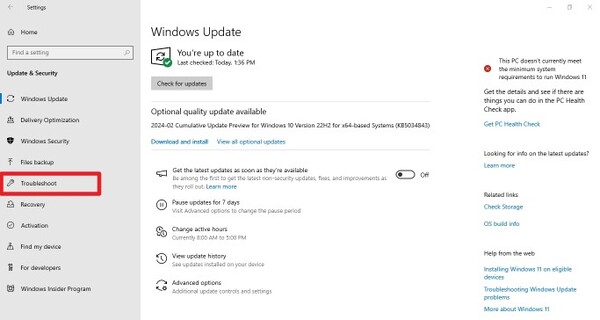
  • Press “Win + I” to open “Settings” and go to “System” then “Recovery” (Windows 11) or “Update & Security” then “Recovery” (Windows 10).

  • Under “Advanced startup”, click “Restart now” and select “Troubleshoot," then go to "Advanced options” and click “Startup Settings," then choose “Restart”.

  • Press “4” or “F4” to boot into “Safe Mode”.

  • Open Command Prompt as Administrator and run the following command: “sfc /scannow”

    run windows sfc scannow to check windows corrupted files
  • Wait for the scan to complete.

  • Restart your computer normally after the scan finishes.

Fix 4: Check and Repair Disk Errors

Corrupted system files aren’t always caused by Windows itself. Sometimes the underlying storage drive contains bad sectors or file system errors that prevent Windows from reading or repairing important files correctly.

Before attempting more advanced recovery methods, it’s worth checking the health of your hard drive or SSD.

Windows includes a built-in CHKDSK utility that scans the disk for logical errors and repairs them automatically when possible.

  • Open Command Prompt as Administrator and enter the following command: “chkdsk C: /f /r”. Type Y if prompted to schedule the scan after restarting.

    run chkdsk command to check disk errors
  • Restart your computer.

  • Allow CHKDSK to complete the disk scan.

  • Once Windows starts again, run the “sfc scannow” command one more time to check whether the issue has been resolved.

⚡ Bonus: What If Your Personal Files Are Also Corrupted During SFC?

While SFC and DISM are designed to repair Windows system files, they don’t recover personal documents, photos, videos, or audio files that have already become corrupted. If a failing hard drive, unexpected shutdown, malware infection, or file system error has also damaged your personal files, you’ll need a dedicated repair tool.

In those situations, 4DDiG File Repair provides an easy way to restore damaged files without requiring advanced technical knowledge. Unlike Windows repair utilities that only focus on operating system components, 4DDiG File Repair is designed to recover corrupted user files across multiple file types: videos, documents, images, or audio files.

Key Features of 4DDiG File Repair

  • Repairs corrupted videos, photos, documents, and audio files caused by system crashes, storage failures, interrupted transfers, malware, or power outages.
  • Supports batch repair to fix multiple damaged files at once.
  • Uses AI-powered technology to rebuild damaged file structures while preserving original quality.
  • Supports common formats such as MP4, MOV, AVI, JPG, PNG, PDF, DOCX, XLSX, MP3, WAV, and more.
  • Offers a built-in preview to check repair results before saving.
  • Features a beginner-friendly interface with no command-line skills required.
  • Delivers fast processing for repairing large folders of damaged files.
FREE DOWNLOAD

Secure Download

FREE DOWNLOAD

Secure Download

Steps to Repair Corrupted Files Using 4DDiG File Repair

  • Install and launch 4DDiG File Repair. Select "File Repair” mode that matches your damaged file type (Video, Photo, Document, or Audio) and click “Add Files”.

    add corrupted files to 4ddig
  • Import one or multiple corrupted files, then click “Repair All” to begin the repair process.

    repair all corrupted documents
  • Wait while the software analyzes and repairs the files. After the repair is complete, click "Preview" to check the results.

  • Save the repaired versions to a secure location with the “Save” button.

Conclusion

Receiving the message Windows Resource Protection found corrupt files doesn’t necessarily mean Windows needs to be reinstalled. In many cases, running DISM, reviewing the CBS.log file, performing another SFC scan in Safe Mode, or checking your drive for errors is enough to restore system integrity.

If corruption extends beyond Windows and affects your personal photos, videos, documents, or audio files, 4DDiG File Repair offers a reliable solution for repairing damaged files quickly through an easy-to-use interface.

FREE DOWNLOAD

Secure Download

FREE DOWNLOAD

Secure Download

William Bollson (senior editor)

William Bollson, the editor-in-chief of 4DDiG, devotes to providing the best solutions for Windows and Mac related issues, including data recovery, repair, error fixes.

(Click to rate this post)

You rated 4.5 ( participated)