How to Open a .DB File on Windows [2 Easy & Free Ways]

5 mins read

Updated on 2026-08-21 11:58:32 to Wiki

A .db file is a database file. Many .db files can be opened and viewed with free software, even if you do not have advanced database knowledge.

If you use Windows, you may find an unfamiliar file with the ".db" extension inside a folder. When you double-click it, Windows may only show the message, "No app is associated with this file." That can make it difficult to check what the file contains.

This guide explains what .db files are and shows you how to open .db files on Windows.

how to open db file

What Is a .db File?

Understanding what a .db file is can help you choose the right tool and avoid mistakes.

.db Is Short for Database

The ".db" extension is short for "database." A database file stores structured data in one or more tables. SQLite is one of the most widely used lightweight database engines. Many applications use SQLite-format .db files to store data.

However, some applications use the .db extension for their own proprietary formats.

Why a .db File Does Not Open When You Double-Click It

Windows uses file extensions to decide which application should open a file. By default, no application is associated with the .db extension. If you force the file to open in a text editor, binary database data will usually appear as unreadable characters. You need a dedicated tool to view it correctly.

Common .db File Examples, Including Thumbs.db

Common .db files on Windows and other devices include:

  • Thumbs.db: A thumbnail cache that Windows creates automatically. Windows recreates it after deletion.
  • Android system data: Examples include contacts2.db for contacts and calllog.db for call history.
  • Desktop application data: Personal finance software, password managers, and other applications may use .db files.

Best Free Software for Opening .db Files on Windows

The following free tools can open many .db files on Windows.

DB Browser for SQLite

DB Browser for SQLite is an open-source SQLite viewer and editor for Windows, macOS, and Linux. It can view and edit data, and run SQL searches.

db browser for sqlite

Follow the steps:

Download and install the application from the official website: sqlitebrowser.org.

  • Select "Open Database," then choose the .db file.

  • Right-click the table you want to inspect in the table list, then select "Browse Table."

  • Open the "Browse Data" tab to view the data in a table.

If you only need to view the file, the Browse Data tab is enough. Be careful with editing controls so you do not change the data by mistake.

SQLiteStudio

SQLiteStudio is a free, open-source tool for viewing and managing SQLite databases. It works on Windows, macOS, and Linux. You can use it to browse tables, view data, edit records, and run SQL queries.

sqlitestudio

Follow the steps:

Download SQLiteStudio from its official website, then install and launch it.

  • Open SQLiteStudio. Go to "Database" > "Add a database," then select the .db file you want to open.

  • Expand the database in the left panel and select the table you want to inspect.

  • Open the "Data" tab to view the records stored in the table.

SQLiteStudio is a good alternative to DB Browser for SQLite if you want to view or manage SQLite databases. However, not every .db file uses the SQLite format. If SQLiteStudio cannot open the file, you may need to identify the application that created it and use a compatible tool instead.

Safety Precautions for Working with .db Files

Viewing a .db file is generally safe. The following precautions can help prevent unexpected problems:

  • Create a backup first: Before editing a .db file that contains application data, save a copy in another location.
  • Close the related application: If an application is using the .db file, another tool may be unable to access it because the file is locked.
  • Do not delete system-related files without checking them: Cache files such as Thumbs.db are recreated after deletion. However, deleting a .db file that stores application data may erase settings or prevent the application from starting.
  • Some .db files may not open: A SQLite viewer may not display a proprietary database format correctly. Identify the application that created the file, then look for a compatible tool.

How to Recover a Deleted .db File?

Deleting a .db file that manages application data can remove settings or cause the application to malfunction. Data recovery software may help in this situation.

4DDiG Data Recovery can search for and recover deleted files from Windows local drives, external hard drives, USB flash drives, SD cards, and other storage media.

The software supports more than 2,000 file formats, including .db files. It covers deletion, accidental formatting, lost partitions, and other data-loss scenarios. Scanning and file previews are available at no cost.

FREE DOWNLOAD

Secure Download

FREE DOWNLOAD

Secure Download

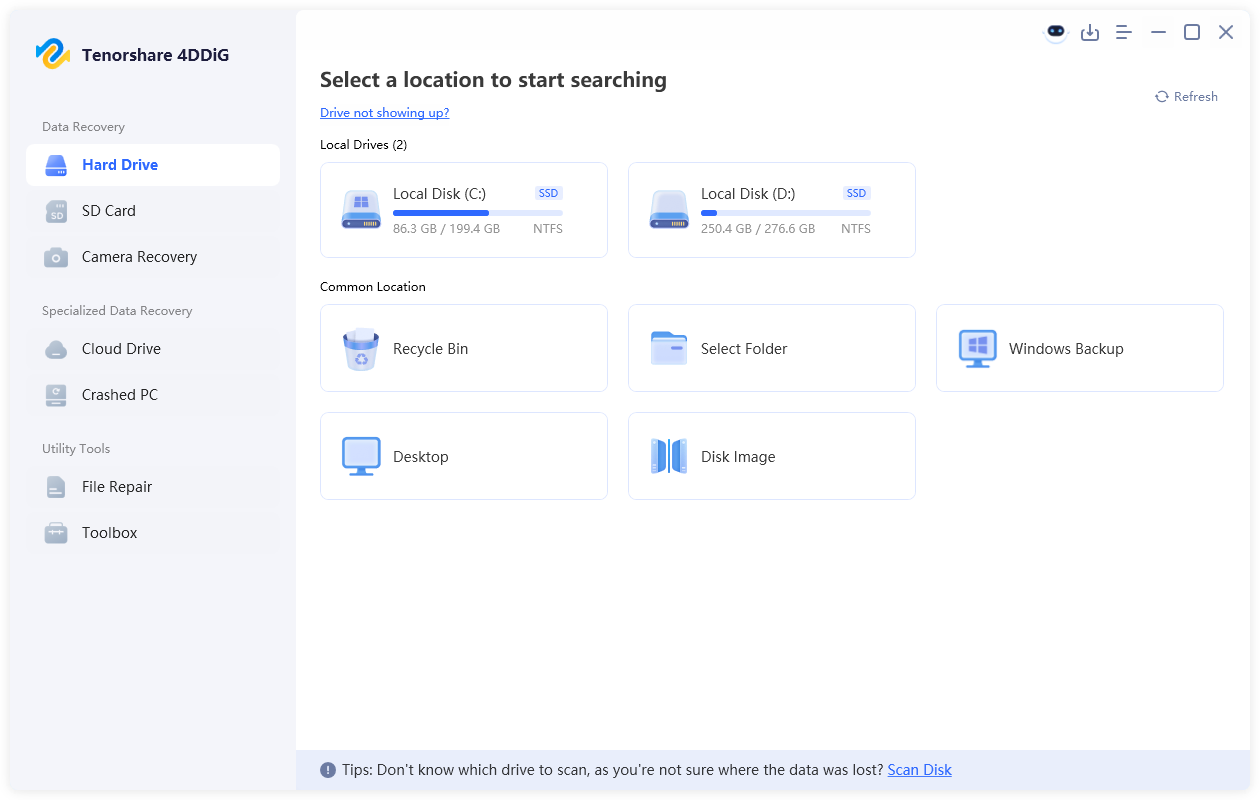
Follow these steps to recover a file with Tenorshare 4DDiG:

  • Install and open 4DDiG. Select the drive or partition where the deleted .db file was originally stored, then start the scan.

    launch 4ddig and enter interface
  • Wait while 4DDiG scans the selected location for deleted and lost files. Use the file-type filters or search for the .db filename to find the deleted database file more quickly.

    click type to see all files 4ddig
  • Preview the recoverable file to confirm that it is the .db file you need. Select the file and click "Recover" to restore it.

    preview and recover the files
  • Choose a different drive or another safe location for the recovered .db file. Click "Save Now" to complete the recovery.

    save the recoverable files
Important:

To avoid overwriting data, save the recovered file to a different drive or to cloud storage such as OneDrive or Google Drive. Do not save it to the original location.

FAQs About .db Files

Is it safe to delete a .db file?

Deleting a cache file such as Thumbs.db is usually safe. However, deleting a database file used by an application may erase settings or cause the application to malfunction.

Can I open a .db file in Microsoft Excel?

Not directly. A practical method is to export the data as a CSV file with DB Browser for SQLite, then open the CSV file in Excel.

Can I open a .db file on Android or iPhone?

Android viewer apps are available, but access to application data may require root privileges. Direct access is difficult on an iPhone. A practical option is to transfer the file to a PC and open it with a desktop tool.

Summary

A .db file is a database file. If it uses the SQLite format, Windows users can view it for free with DB Browser for SQLite or PupSQLite.

If you delete a .db file by mistake, Tenorshare 4DDiG may be able to recover it. You can run a free scan and preview files before deciding whether to recover them.

FREE DOWNLOAD

Secure Download

FREE DOWNLOAD

Secure Download

William Bollson (senior editor)

William Bollson, the editor-in-chief of 4DDiG, devotes to providing the best solutions for Windows and Mac related issues, including data recovery, repair, error fixes.

(Click to rate this post)

You rated 4.5 ( participated)