How to Access BIOS in Windows 11 without Restarting?

5 mins read

Updated on 2026-07-31 17:19:33 to Windows Fix

Entering the BIOS on Windows 11 or 10 usually requires a restart and a specific key press during startup. However, you can access the BIOS without restarting within Windows through the advanced option, avoiding the need to time key presses or force multiple restarts. This method works reliably on most modern systems and is especially useful when the standard boot key approach fails.

1. Can You Access BIOS Windows 11 Without Restarting?

Yes. Hibernation makes entering BIOS without restarting possible by writing the contents of memory to the system drive and then powering the machine down. When you turn it back on, POST gives you the normal opportunity to press the BIOS key. After you save and exit the firmware, Windows can resume the hibernated session.

2. How to Access BIOS Windows 11 Without Restarting Your Work Session?

Save irreplaceable work first. Hibernation normally preserves the session, but firmware changes, encryption prompts, or an unstable setting can still interrupt resume.

  • Open the Start menu and select the Power button.

  • Choose Hibernate. Wait until the screen, fans, and power lights indicate that the computer has fully entered hibernation.

    select hibernate
  • Press the physical power button to turn the PC on.

  • Immediately tap the firmware key repeatedly. Common keys include F2, Delete, Esc , or F10, but the correct key depends on the PC or motherboard manufacturer.

Make only the required UEFI changes. Save the settings and exit. Allow the system to continue booting. Windows should restore the applications and windows saved in the hibernated session. The trick is convenient for checking information or making a modest change, but it is not ideal for every firmware task.

If you need to perform more advanced BIOS adjustments or prefer the traditional key-press method during startup, you can follow the standard guide here: How to Open BIOS?

⚠ Warning: If Hibernate is Missing

Some PCs hide Hibernate from the Power menu even when the feature is supported. Open Windows Terminal or Command Prompt as administrator and run:

$ powercfg /hibernate on

Then open Control Panel, go to Hardware and Sound > Power Options > Choose what the power buttons do, select Change settings that are currently unavailable, and enable Hibernate under Shutdown settings. You can also run powercfg /a to check which sleep states the hardware and current configuration support.

If Windows reports that hibernation is not supported, do not force this method. Use Advanced Startup or a direct firmware command instead.

Prevent Boot Failure: Prepare a Bootable WinPE Drive with 4DDiG

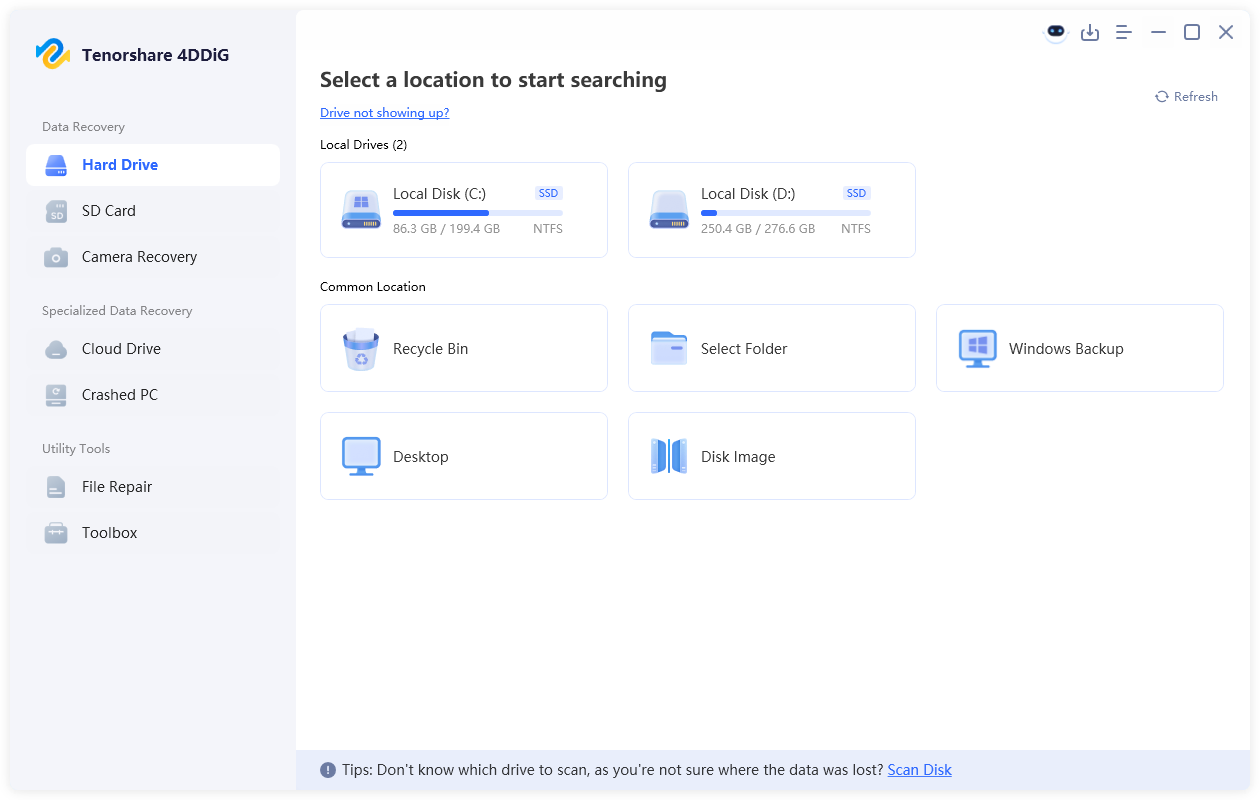
Firmware changes can affect boot order, partition visibility, or Windows boot files. A bootable recovery environment is useful insurance. 4DDiG Partition Manager's Create WinPE feature does not replace BIOS; it creates external media with disk and boot-management tools for a PC that no longer starts normally.

  • Connect a USB drive that you can erase, and copy anything important off it first.

  • Open 4DDiG Partition Manager and select Toolkit > Create WinPE.

    create winpe
  • Select the ISO file you want to use for the WinPE bootable media. If you don't have another ISO file, simply use the default option and click Start to continue.

    select iso file
  • Choose your connected USB flash drive as the target device. You'll see a warning that the USB will be formatted, so make sure you've backed up any important files stored on it. Click Sure to proceed.

    confirm to proceed
  • The process may take a few minutes. Once it's finished, click Finish. When the media is complete, label it and keep it available.

    complete creating winpe

If Windows later fails to load, the WinPE media can provide supported tools for inspecting partitions and repairing a damaged boot configuration. It cannot fix a failed motherboard, undo every BIOS mistake, or bypass a firmware password; the PC must still be able to boot from USB.

How to Fix PC Won't Boot After BIOS Update in 9 Ways?

More FAQs About BIOS

1. Is it F12 to enter BIOS?

Sometimes, but not usually. On many systems, F12 opens a one-time boot-device menu. Common BIOS keys are F2, Delete, Esc, F10, or F1. The startup screen or the manufacturer’s support page is the reliable source for your exact model.

2. How to open BIOS with command line?

Open Windows Terminal as administrator and run:

$ shutdown /r /fw /t 0

The /fw switch asks supported UEFI firmware to open on the next restart. If it fails, use shutdown /r /o /t 0, then select Troubleshoot > Advanced options > UEFI Firmware Settings. Both options restart Windows, so they answer a different need than the Hibernate method.

3. How to see BIOS version without restarting?

Press Win + R, type msinfo32, and press Enter. In the System Information window, look for the BIOS Version/Date entry.

⚡ Conclusion

The practical method for how to access BIOS Windows 11 without restarting your work session is to hibernate the PC, power it on, and press the correct firmware key during POST. Windows can then resume the saved applications after you exit UEFI. Before changing boot, TPM, storage, or security settings, save essential work and keep recovery information available.

For additional protection, use 4DDiG Partition Manager to create a bootable WinPE USB. It will not replace BIOS, but it can provide a useful external environment for supported boot and partition repairs if Windows stops loading afterward.

FREE DOWNLOAD

Secure Download

William Bollson (senior editor)

William Bollson, the editor-in-chief of 4DDiG, devotes to providing the best solutions for Windows and Mac related issues, including data recovery, repair, error fixes.

(Click to rate this post)

You rated 4.5 ( participated)