How to Solve USB Device Over Current Status Detected Error in 7 Ways?

Learn the seven effective methods to fix the 'USB Device Over Current Status Detected' error and discover how to recover lost data with 4DDiG Windows Data Recovery.

5 mins read

Updated on 2026-04-17 15:34:34 to USB Recovery

If your computer suddenly refuses to boot and shows the message USB Device Over Current Status Detected, it can be confusing. Instead of loading into Windows, the system stops early in the startup process to protect itself from potential hardware damage.

This error usually indicates a USB-related power or short-circuit issue, often caused by a faulty device, damaged port, or internal connection problem.

In this article, we'll explain what this error means, why it happens, and walk you through step-by-step solutions to help you quickly identify the cause and get your computer working again.

usb device over current status detected

What Is USB Device Over Current Status Detected Error on Windows?

This part will explain what does this term mean and why it occurs suddenly.

What Does USB Device Over Current Status Detected Mean?

The USB device over current status detected error means your computer has detected a problem with the power flow in its USB system. Normally, USB ports provide a small, safe amount of power to connected devices. When this error appears, it means the system believes too much power is being drawn or there is a short circuit in a USB port or device.

To protect the hardware from damage, the computer will automatically shut down USB power and may stop booting completely. Even if nothing is plugged in, the error can still appear if a USB port or internal connection is short-circuited or damaged.

Why Has Over Current Been Detected on Your USB Device?

  • Faulty USB Device: A damaged or malfunctioning USB/jump drive may draw abnormal power and trigger the error.
  • Damaged or Poor Quality USB Cable: A damaged or low-quality USB cable can disrupt the power supply, causing unstable electrical flow and triggering the overcurrent error.
  • Damaged USB Port or Short Circuit: If there's a short circuit or physical damage within the USB port, it can result in an abnormal power flow which causes the USB device over current status detected Asus error.
  • Power Supply Issues: An unstable or insufficient power supply unit (PSU) can affect USB power distribution and trigger over current warnings.
  • Driver or Software Conflicts: Outdated or incompatible USB drivers or software can sometimes cause power-related issues.
  • BIOS Issues: An outdated or faulty BIOS can sometimes incorrectly detect USB power conditions or fail to manage USB power properly.

The main cause of the over current detected on USB device problem is usually a short circuit in a USB device or USB port. If this issue is not fixed quickly, it can potentially damage the USB controller/driver and even the motherboard. That’s why it is considered a serious hardware warning on Windows systems.

How to Fix USB Device Over Current Status Detected on Windows?

To fix the over current has been detected on your USB device error on Windows during startup, follow the steps below in the correct order.

Method 1: Restart Your Windows PC

First, try a simple restart of your device. In many cases, this error is caused by a minor temporary hardware glitch and is not a permanent issue.

So before moving on to more advanced fixes, it’s a good idea to check whether the problem is still happening. To do this, press and hold the Power button to force restart your computer, then see if the error appears again.

Method 2: Check the USB Devices

If the error continues, the next step is to check all connected USB devices. Start by correctly unplugging every USB device from your computer or USB hub, then inspect each cable and device for any signs of damage.

After that, reconnect the devices one by one to see if the error returns. This will help you identify whether a specific device is causing the overcurrent problem.

Method 3: Scan Computer for the Missing Jumper

If you still see the uUSB device over current status detected will shutdown in 15 seconds error, the next step is to inspect your computer’s internal hardware.

In some cases, the issue may be caused by a missing or improperly set motherboard jumper, which can lead to incorrect USB power detection. This is because USB connectors communicate with the motherboard through these jumpers. To inspect that, follow the steps below:

  • Turn off your computer and open the system case.

  • Examine the USB internal ports area for any missing jumpers. If any jumpers are missing, replace them.

    examine the jumper
  • If the problem goes away after restarting the computer, it was caused by your jumpers.

Notes

If the issue is not caused by a missing jumper, you can try adjusting the jumper position on the motherboard. First, open the computer case (or laptop back cover) to access the motherboard. Look for the jumper block, which is usually a small blue or yellow plastic connector.

The jumper is a small plastic piece that sits on two pins to complete a circuit. Carefully remove it and move it to the next set of pins. For example, if it is currently placed on Pin 1 and Pin 2, reposition it to cover Pin 2 and Pin 3 instead.

Method 4: Check for Connected Front USB Ports

In some cases, the USB device over current status detected nothing plugged in error may be triggered due to issues with the front USB ports on your computer's case. To troubleshoot this problem, follow these steps:

  • Turn off your computer and then remove the power connection from the socket.

  • Then, open the casing of your PC from the side.

  • Look for the USB connectors when you get the motherboard.

    check for connected usb ports
  • Carefully unplug a connector once you've discovered the pins and sockets.

  • Finally, restart your computer. If the USB device over current status detected problem persists, you should replace the USB socket promptly.


tips

Tips

You can also try using the other USB ports on your computer, especially the device back USB Ports. Sometimes a single port may be damaged or not working properly, while the others function normally. Switching to a different port can help you quickly check whether the issue is caused by a specific USB socket.

Method 5: Update BIOS Without USB

If the issue continues even after basic troubleshooting, the next step is to perform a more detailed hardware check like updating BIOS via MSI center, and this method may work when:

  • The BIOS has a bug in USB power detection
  • The motherboard is old and not fully compatible with newer USB devices.
  • The system shows the error without any USB devices connected.
  • You’ve already ruled out hardware issues (devices, ports, cables).
  • Open Microsoft Store, search for MSI Center and download the application.

    update bios via msi center
  • Launch the app, go to the Support menu, and choose Advanced.

  • Finally, pick the BIOS update and wait for it to finish.

Notes

Remember that the MSI Centre tool only works with MSI motherboards; if you have a motherboard from another manufacturer, check their website to see if they also provide a BIOS updater program.

Method 6: Update USB Driver

Outdated or corrupted drivers can sometimes cause incorrect power detection and trigger the USB device over current status detected error. In this case, updating your USB driver may help restore proper communication between your operating system and USB devices.

  • Press Win + X and select Device Manager from the menu.

  • Expand the Universal Serial Bus controllers section to view all USB-related drivers.

  • Right-click on each USB driver and select "Update driver".

    update universal serial bus controllers
  • Choose "Search automatically for drivers" so Windows can find and install the latest version.

  • Wait for the system to complete the update process for each driver, then r.estart your computer to apply the changes

Method 7: Replace Your Motherboard

If you've tried all the steps above and the USB device over current status detected error still appears, the problem may be due to a more serious hardware issue with your motherboard.

In this case, replacing the motherboard might be necessary. However, this is a complex and expensive repair, so it should only be done after carefully checking all other possible causes and making sure a replacement is truly needed.

How to Recover Data Lost Due to the USB Device Over Current Status Detected Error?

If the USB device over current status detected error has already led to system failure or prevented your computer from booting, there is still a chance that your important files are not gone. In many cases, the data remains on the storage drive but is temporarily inaccessible due to the hardware issue.

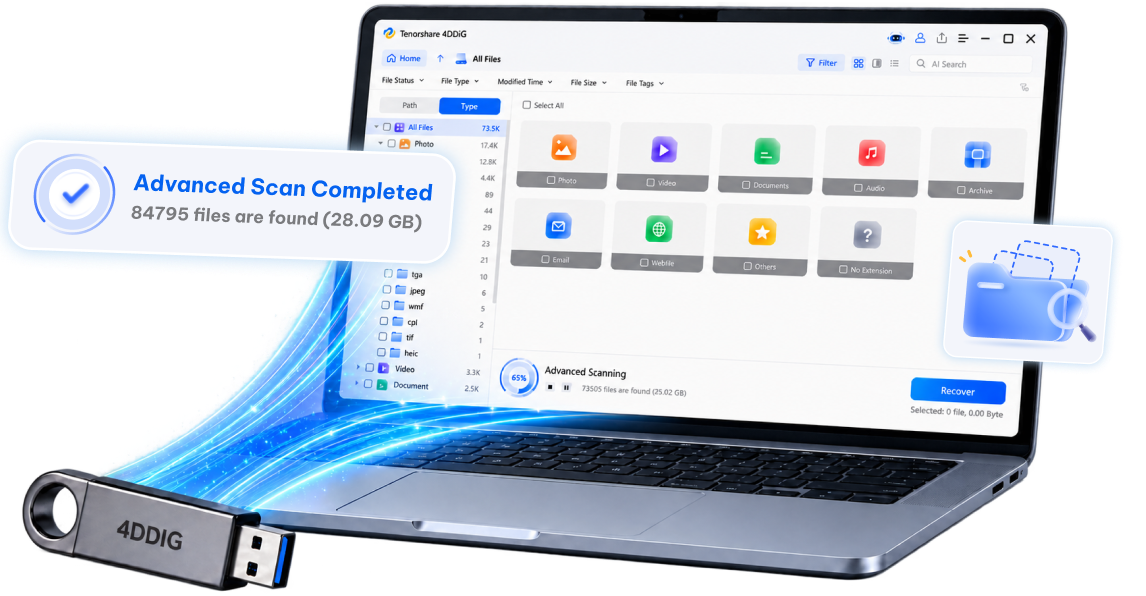
In this case, you can try 4DDiG Data Recovery to retrieve lost or inaccessible files from your affected system. Here are the main features of it:

  • Support for Different Data Loss Scenarios: Recover your data from a USB drive that has become empty due to issues such as malware attacks, file corruption, accidental deletion, or physical damage.
  • Support for Various File Types: Supports the recovery of a wide range of file types, including documents, photos, videos, audio files, emails, and more.
  • Support for Various Storage Devices: Recover data from various storage devices, including USB drives, SD cards, SSDs, HDDs, floppy disks, pen drives, and more.
  • Preview Feature: It allows you to preview recoverable files before starting recovery, saving time and storage space.
  • Deep Scanning: The deep scan feature performs a comprehensive recovery by thoroughly searching the storage device to find lost files in every part of it.

You can follow the below steps to recover your lost/inaccessible data with this data recovery software:

RECOVER LOST DATA

Secure Download

RECOVER LOST DATA

Secure Download

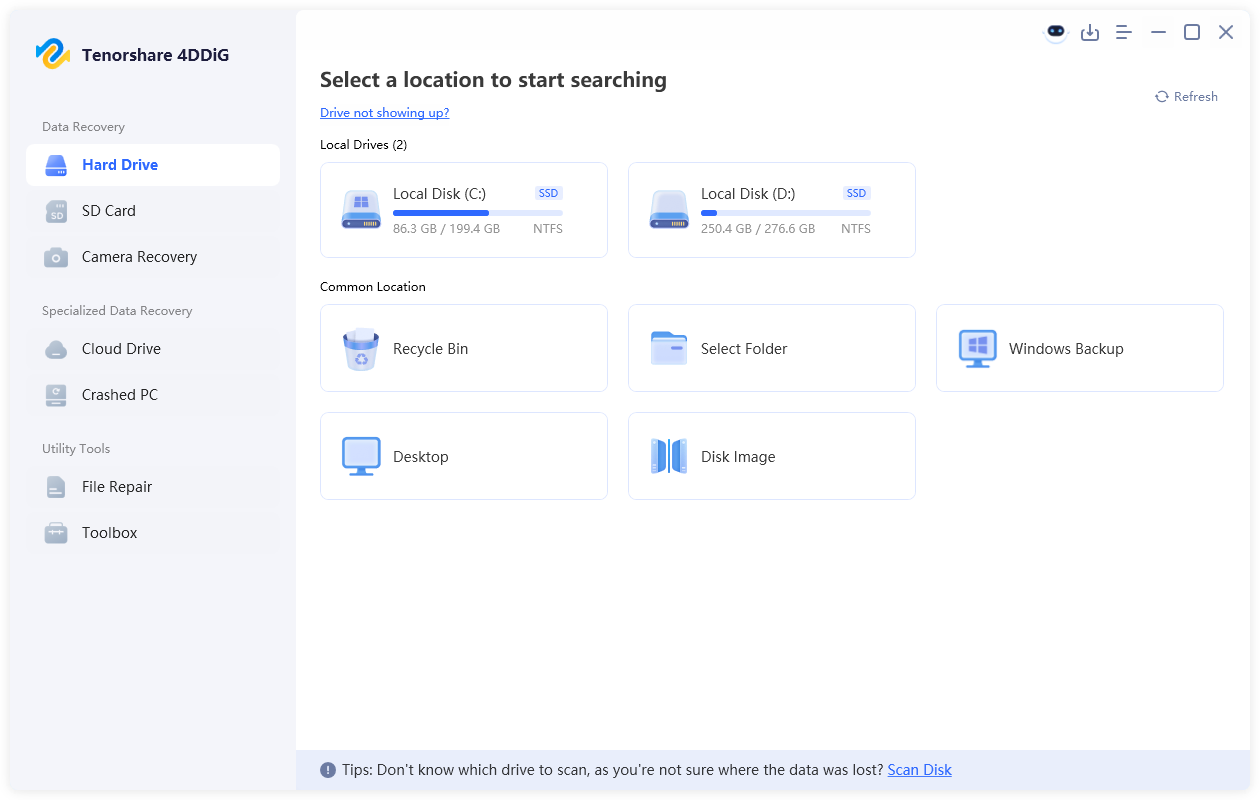
  • Open 4DDiG Data Recovery on your computer and select the drive where you want to recover the data from.

    launch 4ddig and enter interface
  • On the left panel, switch to the "Type" tab and choose the file you want to recover, you can choose from Photo, Video, Document...

    click type to see all files 4ddig
  • Wait for 4DDiG to complete scanning. After that, select the files you need, and click to have a quick preview. When ready, click "Recover".

    preview and recover the files
  • When you're sure what files to recover, select a new location to save the recoverable files, and begin the process. And it's suggested not to choose the original place to avoid data overwriting.

    save the recoverable files

FAQs About USB Device Over Current Status Detected Error

1. Why does my PC keep saying USB overcurrent?

The USB overcurrent error message appears on your PC when a USB device connected to the system attempts to draw more electrical current (power) than the USB port can safely provide. This issue triggers a protective mechanism built into modern computer systems to prevent potential damage to the USB port, connected USB device, or even the entire computer.

2. Do USB ports have overcurrent protection?

Yes, overcurrent protection measures are integrated into modern USB ports to prevent potential damage caused by excessive power drawn from connected devices. Because USB ports are designed to supply specified power levels, exceeding these limits might result in hardware damage, fires, or other safety issues.

3. How to bypass USB over current?

Bypassing USB overcurrent protection is not recommended since it puts your computer, attached USB devices, and potentially your safety at risk. USB overcurrent prevention is an important safety feature that prevents hardware damage caused by high power demand from USB devices.

Final Thoughts

In short, the USB device over current status detected error is usually caused by hardware-related issues. By following the troubleshooting methods in this guide step by step, you can identify the cause and fix the problem effectively.

If you happen to lose data during the process, you still have options. A tool like 4DDiG Windows Data Recovery can help you quickly recover lost files and get your data back safely.

FREE DOWNLOAD

Secure Download

FREE DOWNLOAD

Secure Download

William Bollson (senior editor)

William Bollson, the editor-in-chief of 4DDiG, devotes to providing the best solutions for Windows and Mac related issues, including data recovery, repair, error fixes.

(Click to rate this post)

You rated 4.5 ( participated)