How to Fix USB Keeps Disconnecting and Reconnecting on Windows 10/11?
Noticing that your USB device keeps disconnecting and reconnecting on Windows 10/11 can be frustrating, especially when it interrupts file transfers or prevents your device from working properly.
This issue may occur randomly or repeatedly and can be caused by various factors. In this guide, we’ll explore the possible reasons behind USB randomly disconnects and reconnects, and provide step-by-step solutions to fix it.
Why the USB Disconnecting and Reconnecting Randomly?
Before jumping into fixes, it’s essential to understand what causes USB port keeps connecting and disconnecting. Common reasons include:
- Faulty or loose USB port – The port may be damaged or not making a stable connection.
- Outdated or corrupted drivers – Device drivers may be missing updates or have errors.
- Defective USB cable or device– The cable or device itself may be damaged.
- Hardware conflicts – Multiple devices on the same hub can interfere with each other.
- Software glitches – System bugs or recent updates can affect USB stability.
Now, let’s explore the best ways to troubleshoot and fix the issue.
How to Fix USB Devices Disconnecting and Reconnecting Randomly (Basic Checks)
If your USB device keeps disconnecting and reconnecting on Windows 10/11, begin with these basic fixes. They address the most common causes on your PC and require minimal effort.
- 💻 The first step should be to restart your computer and clean the USB port. A simple reboot can clear temporary system glitches, while removing dust from the port helps ensure a stable physical connection.
- 🔧 Secondly, check whether the original USB port is working properly. Plug the USB device into a different USB port, preferably switching between USB 2.0 and USB 3.0 ports, to see if the issue persists.
- 🧰Thirdly, connect the USB device to another computer. This helps determine whether the issue is caused by the USB device itself or by your current system.
- ⚙️ Lastly, if the USB works normally on another computer, the problem is likely related to your Windows settings or drivers, and you can proceed with more advanced fixes.
How to Fix USB Keeps Disconnecting and Reconnecting on Windows 10/11 (8 Advanced Solutions)
If the basic fixes didn’t resolve the issue, it’s time to try more advanced solutions. These methods focus on system settings and drivers that commonly cause USB disconnecting and reconnecting problems on Windows 10/11.
1 Update or Reinstall USB Drivers
One of the most effective ways to fix the USB device disconnecting and reconnecting is to update or reinstall its drivers. Outdated or corrupted drivers can often disrupt the communication between Windows and your USB device, leading to frequent disconnections.
Refreshing or Reinstalling the drivers can ensure that Windows can properly recognize the device and maintain a stable connection. Here's how to update or reinstall the USB drivers.
- Press "Windows + X" and choose "Device Manager".
- Scroll down and expand "Universal Serial Bus controllers".
- Identify your USB device:
- Standard USB drives usually appear as "USB Mass Storage Device".
- USB 3.0 devices appear as "USB 3.0 eXtensible Host Controller".
- Right-click the device and choose "Update driver", then select "Search automatically for drivers" to install any updates.
- If updating doesn’t resolve the issue, right-click the device again and select "Uninstall device".
- Restart your computer. Windows will automatically reinstall the driver during reboot.
- Reconnect your USB device to check if the connection is stable.
2 Configure Power Management Settings
If updating or reinstalling your USB drivers didn’t fully resolve the issue, the next step is to configure your PC’s power management settings.
Windows may automatically turn off USB devices to save power, which can cause them to disconnect and reconnect unexpectedly. Adjusting these settings helps ensure your USB devices stay powered and maintain a stable connection.
- Press "Windows + X" and select "Device Manager" from the menu.
- Scroll down and expand "Universal Serial Bus controllers".
- Right-click on each "USB Root Hub" or similar USB device, then select "Properties".
- Go to the "Power Management" tab in the Properties window.
- Uncheck the box that says "Allow the computer to turn off this device to save power".
- Click "OK" to save the changes.
- Restart your computer and reconnect your USB device to check if the issue is resolved.
3 Disable the USB Selective Suspend Settings
If the USB disconnecting problem persists after configuring your PC’s power management settings, the next step is to disable the USB Selective Suspend settings.
This feature allows Windows to temporarily turn off individual USB ports to save power, but it can sometimes cause USB randomly disconnects on Windows 10/11. Disabling it can help maintain a consistent connection for your USB devices. Here's how to disable the settings.
- Press "Windows + S" and type "Control Panel", then select it from the search results.
- Go to "Hardware and Sound", then click on "Power Options".
- Next to your active power plan, click "Change plan settings".
- Click "Change advanced power settings".
- In the Advanced settings window, expand "USB settings", then "USB selective suspend setting".
- Set it to "Disabled" for both "On battery" and "Plugged in" (if applicable).
- Click "Apply" and then "OK" to save the changes.
- Restart your computer and reconnect your USB device to test the connection.
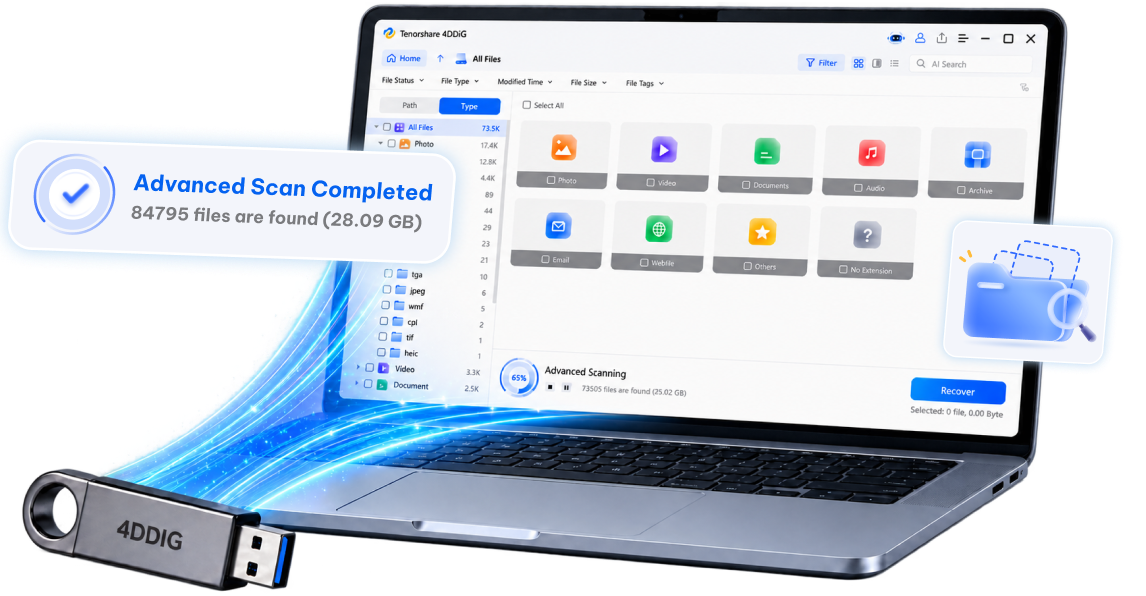
If your USB ports keep disconnecting and reconnecting and you need to access some important data immediately, try 4DDiG to get back all the data. It can recover not only lost, but also deleted/unsaved files due to system crashes, unstable connection, drive formatting...
Secure Download
Secure Download
4 Disable Fast Startup
Even after adjusting USB power settings and disabling selective suspend, some devices may still disconnect due to Windows’ Fast Startup feature.
Fast Startup is designed to speed up boot times, but it can prevent USB devices from initializing properly. Disabling it ensures that all USB hardware is fully initialized when your PC starts. Here's how to disable the Fast Startup feature:
- Press "Windows + S" and type "Control Panel", then select it from the search results.
- Go to "Hardware and Sound", then click on "Power Options".
- Click "Choose what the power buttons do" on the left sidebar.
- Click "Change settings that are currently unavailable" at the top of the window.
- Scroll down to the "Shutdown settings" section and uncheck the box next to "Turn on fast startup (recommended)".
- Click "Save changes". and restart your computer to apply the changes.
5 Check for Windows System File Corruption
For persistent USB disconnection issues that haven’t been resolved by previous methods, corrupted or missing system files can sometimes lead to unstable hardware behavior, including USB devices disconnecting and reconnecting.
Running a system file check helps detect and repair these problems to restore stable device connection. Here's how to run a SFC scan when usb randomly disconnects on Windows 10/11.
- Press "Windows + S", type "cmd" and select "Run as administrator".
- Type the command: sfc /scannow and press Enter.
- Wait while Windows scans and repairs any corrupted system files. This process may take several minutes.
- Follow any on-screen instructions if prompted to fix detected issues.
- Once the scan completes, restart your computer to see if the USB can be connected smoothly.
6 Check for Windows System File Corruption
If your USB device still disconnects after previous fixes, Windows may not be fully recognizing the hardware changes. Scanning for hardware changes in Device Manager forces the system to detect newly connected or reconnected devices, which can resolve hidden conflicts and restore a stable USB connection. Here's what to do.
- Press "Windows + X" and open "Device Manager".
- Click the "Action" tab at the top of the window.
- Select "Scan for hardware changes".
- Wait while Windows searches for new or reconnected devices.
- Check the "Universal Serial Bus controllers" section to see if your USB device is now properly recognized.
- Reconnect your USB device and test whether it maintains a stable connection.
- Repeat the scan if necessary for other USB devices.
7 Run Hardware and Devices Troubleshooter
If USB problems continue even after repairing system files, the next step is to use Windows’ Hardware and Devices Troubleshooter.
This tool scans your computer for hardware conflicts, missing drivers, or misconfigurations that can cause USB devices to disconnect, and it can automatically apply fixes to restore stable connections.
- Press "Windows + I" to open the Settings app.
- Go to "System" (Windows 11) or "Update & Security" (Windows 10), then select "Troubleshoot".
- Click on "Other troubleshooters" or "Additional troubleshooters".
- Locate issues concerning this topic like the "Incoming Connections" in the list and click "Run the torubleshooter".
- Wait while Windows scans for hardware problems, including USB device issues.
- Follow any prompts or recommended fixes provided by the troubleshooter.
- After the process is complete, restart your computer and reconnect your USB device to test stability.
8 Update BIOS or UEFI Firmware
If all other fixes have been tried and USB issues still persist, the problem may lie in your system’s firmware. BIOS or UEFI controls how your motherboard communicates with Windows and manages connected devices.
Updating it can resolve deep hardware-level conflicts that software and driver fixes alone can’t address. You can try the steps below to update the BIOS or UEFI firmware.
- Press "Windows + R", type "msinfo32", and press Enter to check your current BIOS/UEFI version and motherboard model.
- Visit your motherboard or PC manufacturer’s official website and navigate to the support or downloads section.
- Download the latest BIOS/UEFI firmware update that matches your motherboard model exactly.
- Follow the manufacturer’s instructions to create a bootable USB or use their recommended update tool.
- Restart your computer and enter BIOS/UEFI settings (usually by pressing "Del" or "F2" during boot).
- Run the BIOS/UEFI update carefully, following the provided instructions. Do not turn off your PC during the process.
How to Retrieve Files from Inaccessible USB Flash Drive?
When a USB device keeps disconnecting or becomes inaccessible, your files may become corrupted, lost, or unreadable. In these situations, regular troubleshooting might restore the connection but not recover your data. That’s where tools like 4DDiG Data Recovery can help.
Secure Download
Secure Download
4DDiG can scan the affected drive, detect lost, deleted or corrupted files, and recover documents, photos, videos, and other important data safely from USB flash drives, SD cards and internal/external hard drives...
Don't worry about your data when the USB ports keep disconnecting and reconnecting on Windows 10/11. Download and install 4DDiG and follow our guidance to access and recover all files!
- Launch 4DDiG on your computer and choose the unstable USB drive or device that contains the inaccessible files.
- Wait until 4DDiG finishes analyzing and scanning the drive. In the left-hand panel, go to the "Type" tab and select the type of files you want to recover, such as photos, videos, documents, or other file categories.
- Once the scan is complete, review the results and use the preview feature to check the files you want to recover.
- After selecting the files, choose a safe location on your computer to save the recovered data. Avoid saving to the original USB drive to prevent overwriting any remaining files.
Conclusion
Follow this article to fix the USB keeps disconnecting and reconnecting on Windows 10/11 issue. Start with simple fixes like updating or reinstalling USB drivers before moving to advanced solutions like running troubleshooter. If there is data loss or you want to access files, professional data recovery software like Tenorshare 4DDiG may be needed.
Secure Download
Secure Download
💡 Summarize with AI:
You May Also Like
- Home >>
- USB Recovery >>
- How to Fix USB Keeps Disconnecting and Reconnecting on Windows 10/11?
ChatGPT
Perplexity
Grok