[2026 New] How to Encrypt a Hard Drive on Windows & Mac

5 mins read

Updated on 2026-03-10 11:26:02 to Hard Drive

Protecting sensitive files is more important than ever, especially if you store personal, financial, or work-related data on your computer. Learning how to encrypt a hard drive ensures that even if your device is lost or stolen, your information remains secure.

Both Windows and Mac offer built-in encryption tools for internal and external drives. In this guide, we’ll walk you through everything step by step.

how to encrypt a hard drive

What Does It Mean to Encrypt a Hard Drive?

Before diving into the steps, it’s important to understand what drive encryption actually does. Encryption transforms readable data into coded information that cannot be accessed without proper authentication.

When you encrypt a hard drive, the system uses advanced cryptographic algorithms to protect your files. Without the correct password, recovery key, or hardware verification, the data cannot be opened. Even if someone removes the drive and connects it to another computer, the contents remain unreadable.

In simple terms, encryption adds a strong digital lock to your storage device. It protects everything on the drive, documents, photos, apps, and system files from unauthorized access.

Things to Know Before Encryption

Before you begin the encryption process, there are a few important considerations. Proper preparation ensures smooth encryption without risking your data.

  • First, it is strongly recommended to back up your data before enabling encryption. Although encryption does not normally erase data, unexpected interruptions such as a power failure can cause issues.

  • Second, encryption can take a long time depending on drive size and speed. A large internal drive may take several hours to encrypt fully. During this time, your computer may run more slowly.

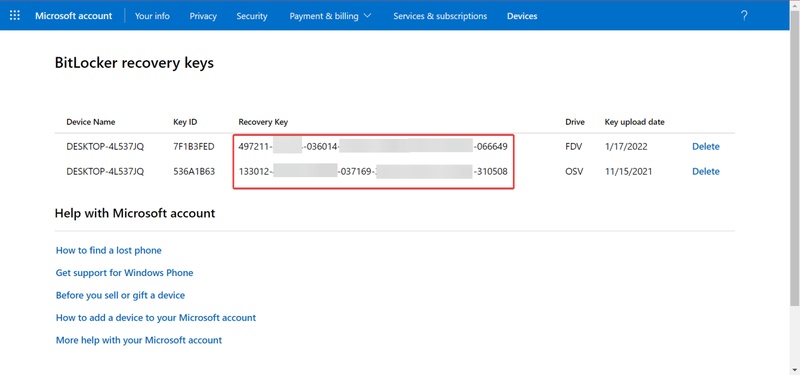
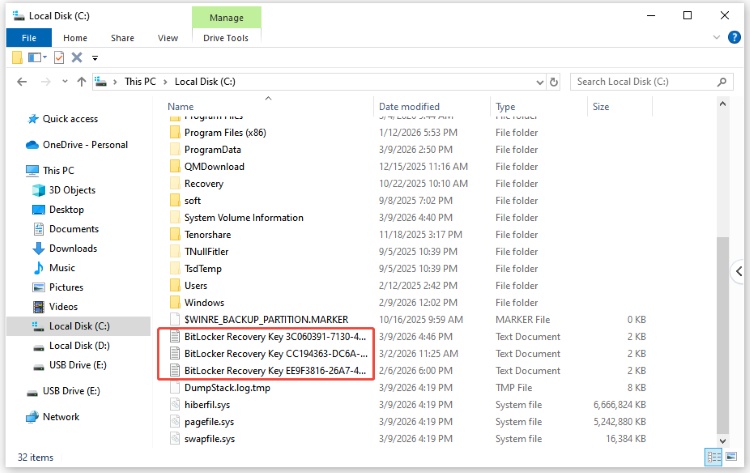
Finally, make sure you store your recovery key safely. If you lose it, you may permanently lose access to your encrypted data.

How to Encrypt a Hard Drive on Windows?

Windows provides built-in encryption using BitLocker. The process differs slightly for internal and external drives, so it’s important to follow the correct steps.

Encrypt an Internal Hard Drive on Windows

Internal drives use BitLocker with TPM (Trusted Platform Module) for encryption. TPM is a hardware-based security chip that stores encryption keys securely. When you encrypt an internal system drive:

  • The system automatically verifies the hardware environment during startup.
  • During normal boot, no password is required because the drive unlocks automatically.
  • If hardware changes are detected, Windows will prompt for the recovery key.

This makes internal encryption secure yet convenient for daily use. Follow steps to encrypt an internal hard drive on Windows 10/11:

  • Press Windows + S and search for "Manage BitLocker".

    search for manage bitlocker
  • Click "Turn on BitLocker" against the drive you want to encrypt.

    click turn on bitlocker internal hard drive
  • Choose how you want to store your recovery key.

    choose how to back up recovery key
  • Choose how much of your drive to encrypt, you can stick to the default option.

    choose how much of your drive to encrypt
  • Next, choose which encryption mode to use, then click "Next".

    choose which encryption mode to use
  • When prompted, check the box next to "Run BitLocker system check" and click "Continue".

    check run bitlocker system check
  • Click "Restart Now", and the encryption is complete.

Once enabled, your internal drive will be automatically protected at startup.

Encrypt an External Hard Drive on Windows

External drives use BitLocker To Go, which is designed for portable storage devices. Unlike internal drives:

  • External drives must be manually unlocked with a password.
  • You can set a password or use a smart card for access.
  • Each time you connect the drive to a new computer, you must enter the password.

This makes it ideal if you want to know how to encrypt an external hard drive or how to encrypt a portable hard drive for travel or business use. Let’s see how to encrypt an external hard drive on Windows:

  • Connect your external drive to the computer and search for "Manage BitLocker" in Windows Search, then open it.

  • Look for the "Removable Data Drives" section and click "Turn on BitLocker" against your external drive.

    click turn on bitlocker external hard drive
  • Choose "Use a password to unlock the drive," then enter and confirm your password. Back up the recovery key to a file or print it.

    enter password for unlocking encrypted external hard drive
  • After choosing how to back up the recovery key, choose how much of your drive to encrypt, the first option is recommended.

    choose encrypt used disk space only
  • Next, choose the encryption mode (compatible mode recommended for older PCs).

    choose compatible mode for encrypting external hard drive
  • Now, click "Start encrypting" for Windows to encrypt your external hard drive.

    start encrypting external hard drive

Now you know how to encrypt a hard drive with BitLocker, specifically for portable devices.

People Also Read:

How to Disable BitLocker?

How to Encrypt a Hard Drive on Mac

Mac computers offer built-in encryption tools called FileVault for internal drives and Disk Utility for external drives.

Encrypt an Internal Hard Drive on Mac

Mac uses FileVault to encrypt the startup disk. FileVault provides full-disk encryption using XTS-AES-128 encryption. Here’s how to Enable FileVault and encrypt an internal hard drive with it:

  • Click the Apple menu.

  • Go to System Settings (or System Preferences) and select "Privacy & Security".

  • Click "FileVault", toggle it on.

    enable filevault on mac
  • Choose how to unlock your disk and save your recovery key somewhere secure. It will be a 24-character-long key.

  • Restart your Mac if prompted.

After activation, encryption runs in the background. You must log in with your password to access the disk after each startup.

Encrypt an External Hard Drive on Mac

Mac uses Disk Utility to encrypt external drives. This method allows you to add password protection to any compatible drive. Before you begin, it is recommended to create a backup of your data on the drive. Here’s how to encrypt an external hard drive on Mac:

  • Connect your external drive, then press "CMD + Space" and open "Disk Utilities."

  • Select the external drive from the sidebar and click "Erase" (backup data first).

    erase an external hard drive on mac
  • Choose format: Mac OS Extended (Journaled, Encrypted) and set a name for your drive.

    choose macos format file system
  • Enter a strong password and hint, then click "Choose."

    enter a password on disk utility
  • Wait for the process to complete. Once complete, your drive will ask for a password to unlock.

    encrypt an external hard drive on mac

The drive will be formatted and encrypted. Each time you connect it, you must enter the password to access files.

How to Recover Data from a BitLocker-encrypted Drive

If your hard drive is encrypted with BitLocker and you suddenly lose access to your files, it may seem like the data is permanently inaccessible. However, recovery may still be possible if the drive can be detected and the recovery tool supports BitLocker encryption, since many standard tools cannot scan the drive unless the BitLocker protection is properly handled first.

Tools like 4DDiG Data Recovery offer dedicated support for BitLocker-encrypted drives. In addition to automatically unlocking a BitLocker drive, it also allows users to scan the encrypted drive directly and attempt data recovery even when the drive cannot be unlocked normally.

FREE DOWNLOAD

Secure Download

FREE DOWNLOAD

Secure Download

The software scans the drive and displays recoverable files such as photos, videos, and documents, and it provides a preview feature so you can check files before restoring them. In the following section, we’ll walk through the steps to recover data from a BitLocker-encrypted hard drive using 4DDiG.

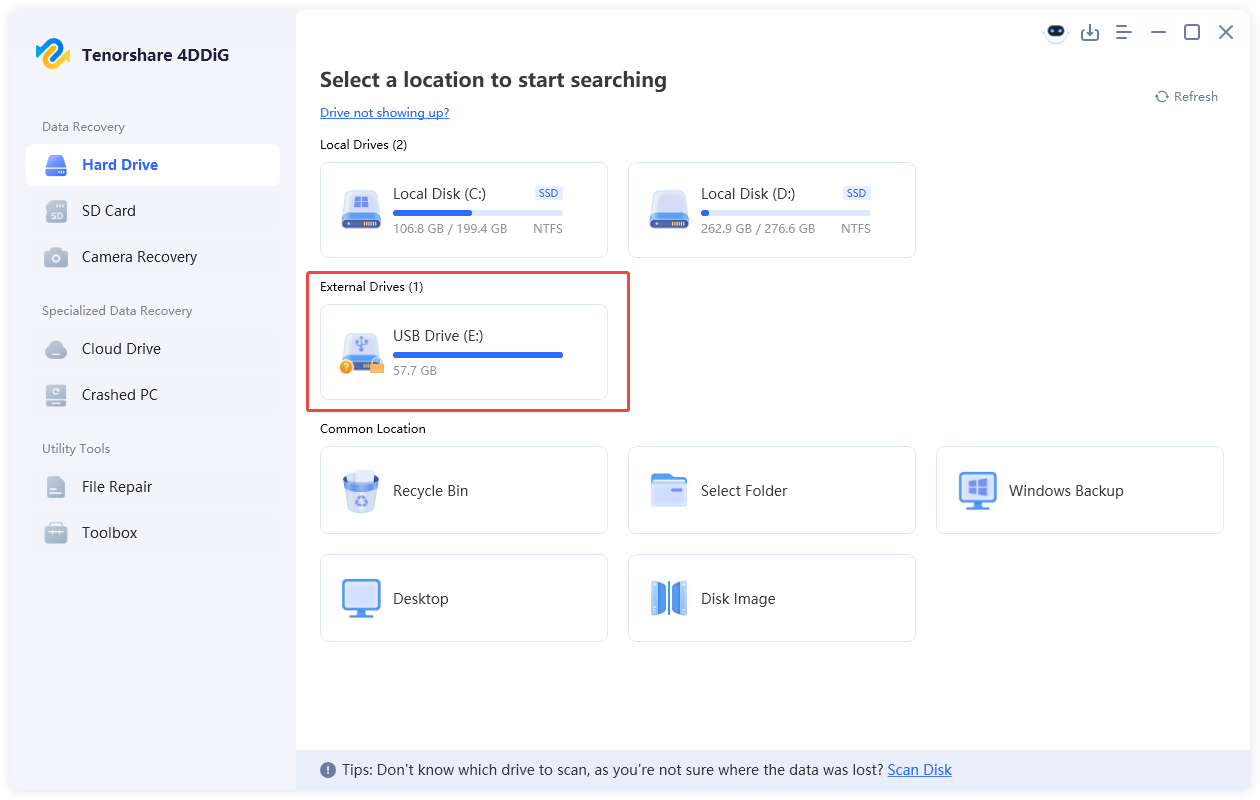
  • Choose the Encrypted Drive to Scan

    Download and install 4DDiG on your computer, launch it and select the BitLocker-encrypted drive.

    4ddig bitlocker encrypted drive interface
    Note:

    Before scanning, you can attempt one of the following methods:

    • Unlock BitLocker with password or recovery key
    • Use the Automatic Unlock feature
    • Scan without unlocking

    After trying any of these methods, proceed with scanning the drive.

  • Scan the Drive

    Click the file types you want to scan to start scanning the encrypted drive. When the scanning finishes, you can use the Search or Filter features to find the exact files you are looking for.

    locate files you want to recover
  • Recover Files from BitLocker-Encrypted Drive

    Next, open any file to check its preview and click "Recover" to restore it.

    click recover button
  • Save the Recovered Files

    Save recovered files to a different drive to avoid overwriting data by clicking "Save Now" and choosing a new location.

    click save now button

FAQs

Q1: How long does it take to encrypt a hard drive?

Encryption time depends on drive size and speed. A small SSD may take less than an hour, while a large HDD can take several hours.

Q2: Does encrypting a hard drive erase data?

No, encryption does not erase existing data under normal conditions. However, backing up your files beforehand is strongly recommended.

Q3: How to check if a hard drive is encrypted on Windows 11?

Go to the Control Panel and open BitLocker Drive Encryption to see the status. You can also use the command manage-bde -status for detailed information.

Q4: How to check if an external hard drive is encrypted on a Mac?

Open Disk Utility and select the drive to view its format. If it shows Encrypted, the drive is protected with password encryption.

Q5: Can I encrypt a hard drive without formatting?

Yes, internal drives can be encrypted without formatting using BitLocker or FileVault. However, encrypting external drives on a Mac may require formatting.

Q6: Can an encrypted hard drive be recovered?

Yes, encrypted drives can be recovered if you have the password or recovery key. Specialized software like 4DDiG can assist in recovering accessible data.

Conclusion

Understanding how to encrypt a hard drive is essential for protecting sensitive data on both Windows and Mac systems. Whether you’re securing an internal drive with BitLocker or FileVault, or learning how to encrypt an external hard drive for portability, built-in tools make the process straightforward.

If you ever face data access issues, 4DDiG Windows Data Recovery offers a reliable solution to recover files from encrypted drives safely and efficiently.

FREE DOWNLOAD

Secure Download

FREE DOWNLOAD

Secure Download

William Bollson (senior editor)

William Bollson, the editor-in-chief of 4DDiG, devotes to providing the best solutions for Windows and Mac related issues, including data recovery, repair, error fixes.

(Click to rate this post)

You rated 4.5 ( participated)