[2026] How to Perform Toshiba Hard Drive Recovery Step-by-Step

5 mins read

Updated on 2026-05-20 16:38:24 to Hard Drive

Toshiba hard drive recovery is often possible even after accidental deletion, formatting, or drive access problems. Many users lose important photos, videos, work files, or backups because of system errors, sudden removal or corrupted partitions.

The most logical data loss cases can still be handled successfully if you stop using the drive immediately. This guide explains the causes of data loss, what situations are recoverable, and how to recover files from a Toshiba hard drive safely.

toshiba hard drive recovery

Common Causes of Toshiba Hard Drive Data Loss

Data loss on Toshiba hard drives can happen for many different reasons. Some problems are software related and recoverable while others involve physical hardware failure. Understanding the cause helps you choose the safest recovery method and avoid making the situation worse. Common causes are:

  • Accidental deletion of files or folders
  • Formatting the Toshiba drive by mistake
  • Virus or malware attacks damage stored data
  • File system corruption after unsafe removal
  • Partition loss or RAW drive errors
  • Operating system crashes
  • Physical damage caused by drops or impact
  • Overheating or aging hard drive components
  • Improper shutdowns during read/write operations

In many situations, the files are not completely erased immediately. Instead, the system marks the storage space as available for new data. This is why early recovery attempts usually have a higher success rate.

Can Data Be Recovered from a Toshiba Hard Drive?

Yes, in many cases, lost data from Toshiba hard drives can still be recovered, especially if the files have not been overwritten. Recovery success mainly depends on the type of damage involved and whether the drive is still detectable by the computer.

There are two main Toshiba hard drive recovery situations that are logical data loss and physical damage.

Recoverable Logical Data Loss Scenarios

Logical problems happen when the storage device itself still works physically, but the files become inaccessible because of deletion, formatting, corruption, or software issues.

Common examples include:

Accidental deletion

Files or folders removed from a Toshiba drive, either after being emptied from the Recycle Bin or permanently deleted using the "Shift+Delete” keyboard key combination.

Formatted drive or partition

A Toshiba external drive, internal HDD partition, or SSD volume that has been quickly formatted, resulting in data loss.

RAW file system errors

The Toshiba hard drive suddenly becomes unreadable and asks to be formatted before use.

Partition loss

One or more partitions disappear because of corruption, disk management errors, or failed resizing operations.

Virus-related data loss

Malware hides, deletes, or corrupts files stored on the Toshiba device.

System crash interruption

Files become inaccessible after a Windows crash or improper shutdown during transfer.

Drive not opening properly

The hard drive appears in Disk Management but cannot be accessed normally in File Explorer.

If you encounter any of these situations, stop writing new data to the Toshiba drive immediately. Avoid random repair attempts and disconnect the drive safely to reduce the risk of overwriting recoverable files.

Physical Damage Situations

Physical damage involves actual hardware failure inside the Toshiba drive. These situations are more serious and may require professional recovery services instead of software recovery.

Examples include:

  • Clicking, grinding, or buzzing noises
  • Hard drive not spinning properly
  • Burn damage from electrical surges
  • Water or liquid exposure
  • Broken USB connector or damaged PCB board
  • Severe overheating damage
  • Drive is completely undetectable in BIOS or Disk Management

In physical damage cases, continued use can permanently destroy recoverable data. Avoid opening the drive yourself unless you are a professional technician.

⚡ How to Recover Data from a Toshiba Hard Drive (Step-by-Step)

If your Toshiba drive is not physically damaged, data recovery software may help restore lost files. Tools like 4DDiG Hard Drive Recovery can scan deleted, formatted, corrupted, or inaccessible drives without overwriting existing data. Its key features include:

  • Deleted & Formatted File Recovery: Restore files lost due to accidental deletion, formatting, or partition loss from Toshiba internal and external hard drives.
  • Wide Device Support: Recover data from HDDs, SSDs, USB drives, and memory cards.
  • Multiple File Type Recovery: Retrieve photos, videos, documents, audio files, and other commonly used file formats.
  • File Preview Before Recovery: Preview recoverable files before saving them to confirm the recovery results.
  • Deep Scan Capability: Perform deep scans to locate hidden files and lost partitions more thoroughly.
  • Windows Compatibility: Fully compatible with Windows 11, 10, 8, and 7.
FREE DOWNLOAD

Secure Download

FREE DOWNLOAD

Secure Download

Let’s see how to recover data from a Toshiba hard drive with 4DDiG:

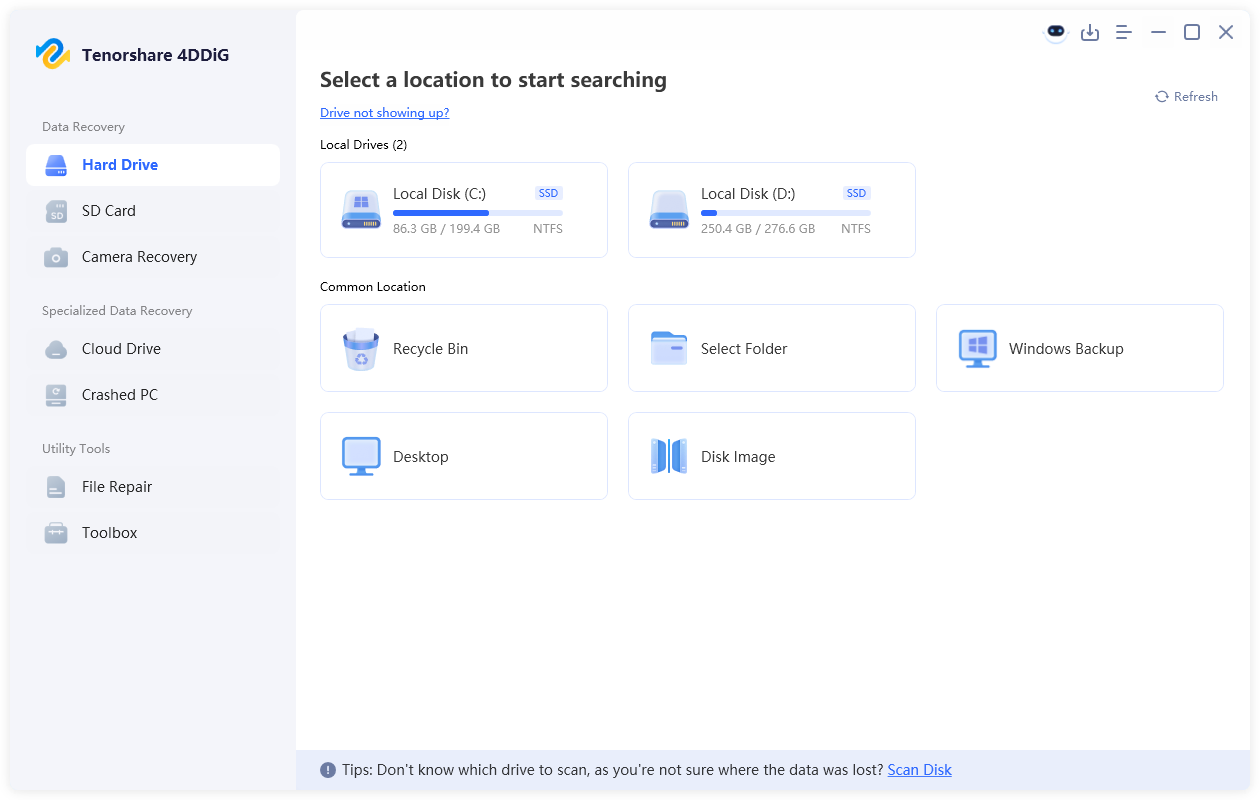
  • Connect your Toshiba external hard drive or internal drive to the computer properly. Launch 4DDiG and select the Toshiba drive from the storage list.

    launch 4ddig and enter interface
  • 4DDiG will automatically begin searching for lost files. The software will scan your Toshiba Drive, and meanwhile, you can select your desired "File Type" to quickly get results.

    click type to see all files 4ddig
  • After scanning finishes, preview the files in your Toshiba Drive before recovery by clicking on them. This helps confirm whether the required files are still intact and recoverable. Next, select the files you want to restore and click “Recover.”

    preview and recover the files
  • Once prompted, save the recovered data to another storage device instead of the original Toshiba hard drive to avoid overwriting remaining data.

    save the recoverable files

After recovery is complete, you can back up the restored files safely before reusing or repairing the Toshiba drive.

Other Ways to Recover Files from a Toshiba Hard Drive

Besides recovery software, several additional methods may help depending on the specific issue affecting your Toshiba drive.

Method 1: Access the Toshiba HDD with Another PC

Sometimes the issue is related to the current computer rather than the hard drive itself. Connecting the Toshiba HDD to another PC can help determine whether the drive is still readable.

If the files appear normally on another computer, copy the important data immediately before troubleshooting the original system further. You can also try:

  • Using another USB cable
  • Switching USB ports
  • Connecting through a powered USB hub
  • Testing on another operating system

Method 2: Recover Deleted Files from the Recycle Bin

If the files were deleted recently from an internal Toshiba drive, they may still exist in the Recycle Bin. Follow these steps on how to recover Toshiba Hard Drive data from the recycle bin:

  • Open the Recycle Bin on the desktop and look for the deleted files or folders

  • Right-click the required item and select "Restore."

    recover toshiba files from recycle bin
  • The files will return to their original location.

This method only works if the files were not permanently deleted or removed using Shift+Delete.

Method 3: Use Built-in Toshiba Recovery Utility

Some Toshiba systems include built-in recovery utilities for restoring factory settings or recovering partitions. Steps may vary depending on the device model, but the general process includes:

  • Restart the Toshiba computer and press the recovery key during startup (often 0 or F12) to open the recovery utility.

    use toshiba recovery utility for data recovery
  • Choose the recovery or troubleshooting option and follow the on-screen instructions carefully.

Be cautious because factory recovery options may erase existing data if selected incorrectly.

Tips to Prevent Future Toshiba Hard Drive Data Loss

Data recovery is never guaranteed, especially when physical damage or overwriting occurs. Building safer storage habits can greatly reduce future risks. Here are several useful prevention tips:

  • Create regular backups of important files
  • Use cloud storage for critical documents
  • Safely eject external Toshiba drives before removal
  • Avoid interrupting file transfers
  • Keep antivirus software updated
  • Replace aging hard drives before failure occurs
  • Protect external drives from drops and impact
  • Avoid overheating by ensuring proper ventilation
  • Do not ignore unusual clicking or buzzing sounds

Good backup habits are still the best protection against permanent data loss.

Conclusion

Toshiba hard drive data recovery is possible in many situations such as accidental deletion, formatting, partition loss and file system corruption. The most important step is to stop using the drive immediately and avoid overwriting recoverable data.

For logical data loss cases, 4DDiG Data Recovery provides a practical way to scan and restore files from Toshiba drives safely. With the right recovery steps and proper backup habits, you can greatly improve your chances of recovering important data successfully.

FREE DOWNLOAD

Secure Download

FREE DOWNLOAD

Secure Download

William Bollson (senior editor)

William Bollson, the editor-in-chief of 4DDiG, devotes to providing the best solutions for Windows and Mac related issues, including data recovery, repair, error fixes.

(Click to rate this post)

You rated 4.5 ( participated)