9 Proven Ways to Fix Microsoft Excel Not Responding
Have you ever been in the middle of editing an important spreadsheet or trying to save your work—when Excel suddenly freezes and displays the dreaded message: “Microsoft Excel is not responding”?
Excel is a powerful tool for data analysis, yet it can suddenly stop responding for various reasons. When this happens, you’re left staring at a frozen screen, unsure whether to wait, force close the program, or risk losing unsaved work.
In this guide, we’ll walk you through proven ways to fix Excel not responding issues without losing your data. All methods have been tested on the latest versions of Microsoft Excel to ensure they’re safe and effective.
Why My Excel Is Not Responding?
If Excel keeps freezing, it’s rarely a sign of permanent damage. In fact, the “not responding” message is usually caused by a few common and fixable issues. Understanding the reasons behind is the fastest way to fix the problem.
- Large or complex Excel files: Big datasets, multiple worksheets, pivot tables, or heavy formatting can overwhelm Excel and cause it to freeze.
- Complex formulas and constant recalculation: Volatile functions, array formulas, or circular references can keep Excel stuck in a recalculation loop.
- Insufficient system resources: Low available RAM or high CPU usage can prevent Excel from responding, especially when working with large files.
- Faulty or incompatible add-ins: Some Excel add-ins may conflict with the app and cause it to hang or freeze.
- Corrupted Excel workbook: File corruption from crashes, improper saves, or sudden shutdowns often leads to Excel freezing when opening or editing the file.
⚡ Act Fast: How to Save When Excel Not Responding?
Even if Excel is frozen or partially responsive, there are ways to save your work before it crashes completely. Acting fast can help you save important data and avoid losing hours of work. Here’s how to save your files when Excel isn’t responding.
1 Save Excel Files with Saving Shortcut
In Excel, there are a few ways to save your files. But one of the easiest methods is using shortcuts. If you want to quickly preserve your work when Excel is unresponsive, simply press the keyboard shortcut keys.
- Press the keyboard shortcut Ctrl + S (Windows) or Command + S (Mac) to save your current workbook.
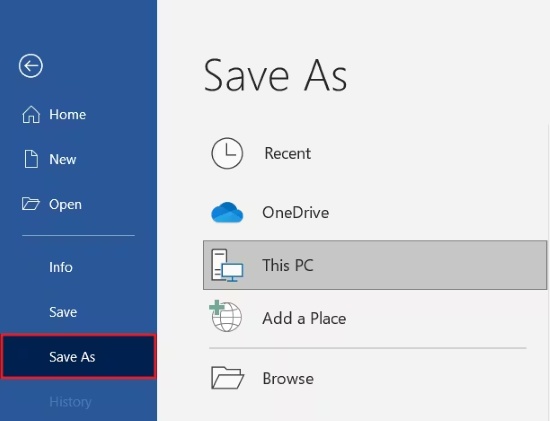
- This will open the "Save As" dialog box, where you can change the settings, and then click "Save".
- Wait a few moments to let Excel complete the save process.
💡 Pro Tip: This method works best when Excel is partially responsive. If it's completely frozen, the shortcut may cause Excel to crash more quickl.
Saving the Excel while it's not responding can be difficult in many cases. At that time, you can attempt to recover it, a more reliable solution.
2 Use AutoRecover to Restore Unsaved Workbooks
AutoRecover is a lifesaver when Excel stops responding unexpectedly. Before you rely on it, make sure the feature is enabled in "File → Options → Save" so Excel periodically saves your work. If AutoRecover is on, you can quickly restore unsaved workbooks after a crash or freeze.
If AutoRecover was enabled before, it only takes a few minutes to recover the unsaved Excel files.
- Force quit Excel using Task Manager (press Ctrl + Shift + Esc, select Excel, and click "End Task").
- Reopen Excel after the crash or freeze.
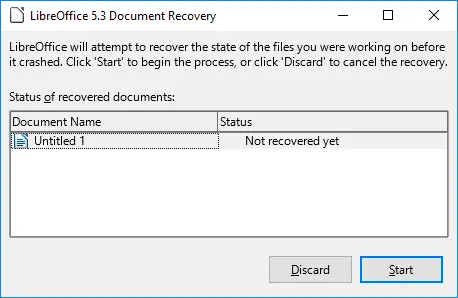
- If AutoRecover is enabled, the "Document Recovery" pane will appear on the left side of the window.
- Click the available unsaved workbook in the pane to open it.
- Save the recovered workbook immediately and choose the desired location to save it.
❓ What to know about AutoRecover feature?
- Depending on your AutoRecover frequency, you may lose a few minutes of work. You can adjust this interval in "File → Options → Save."
- It is not a substitute for manual saving, and it's suggested to regularly press Ctrl + S, especially for critical files.
- You should check the Document Recovery pane immediately, as the recovered workbook may disappear if you don’t save it promptly.
3 Use the “Recover Unsaved Workbooks” Feature
If AutoRecover didn’t capture your work, don’t worry. Excel also offers a manual option called the “Recover Unsaved Workbooks” feature, which lets you locate and restore files that weren’t saved before the program closed.
- Likewise, force quit the Excel via Task Manager.
- Go to "File → Info → Manage Workbook → Recover Unsaved Workbooks."
- Select the unsaved workbook you want to restore and click "Open".
- Immediately save the restored workbook by pressing Ctrl + S (Windows) or Command + S (Mac) shortcut keys again.
⚠️ Restrictions:
- This method cannot recover files that were previously saved and then deleted or corrupted.
- Unlike AutoRecover, this feature only captures files that were never manually saved.
- If the file isn’t listed, it may not have been cached or Excel might have been closed without triggering temporary saves.
4 Restore Excel Files with Recovery Software
The built-in tool is no doubt the quickest way to recover your unsaved Excel files when it suddenly stops responding, but it has certain restrictions. Does it mean you can't recover Excel files at all? NO!
You can still try a dedicated software like 4DDiG Data Recovery to scan, find and retrieve your unsaved Excel work. It's handy for users who need to restore lost/deleted/unsaved data, because of the following advantages:
✔️ It can recover unsaved Excel files, with up to 99.5% success rate.
✔️ It supports recovering 2,000+ files, including previous version of Word, Powerpoint, photos, documents, videos...
✔️ You can preview the recovered files first and then decide which ones to save.
✔️ It can restore files lost from accidental deletion, disk formatting, system crashes, partition loss, and more.
✔️ Available for both Windows and macOS, so you can use it to recover Excel files on multiple systems.
Secure Download
Secure Download
Step-by-step using 4DDiG for Excel File Recovery:
- Open 4DDiG Data Recovery on your computer and select the drive where the unsaved Excel file was lost.
- On the left panel, switch to the "Type" tab and choose "Unsaved File" to quickly locate unsaved Excel, Word, PPT, and other documents.
- Review the scan results, select the files you need, and click "Preview". When ready, click "Recover".
- When prompted, select a new location to save the recovered files, and avoid choosing the original drive to prevent data overwriting.
How to Fix Excel Not Responding (Completely Frozen)
Once you understand the causes, fixing Excel is easier. Sometimes it just needs a moment to catch up—if it’s processing a large file or complex formulas, give it a minute or two. Avoid clicking repeatedly or force closing, as this can risk losing unsaved work. But if Excel continues to freeze, you can try other methods to get it working again.
The following methods work when Excel is completely unresponsive and you cannot interact with it.
1 Free Up System Resources
Excel may stop responding if your computer doesn’t have enough free memory or processing power. Running multiple programs at the same time can overload your system, causing Excel to freeze. So, you can close unnecessary apps and background processes to free up resources and help Excel become responsive again.
2 Change the Default Printer
If you experience Excel not responding when printing, the issue might be related to your default printer, because Excel may check the default printer when opening the application.
If Windows is managing printers and no official default is set, this can cause Excel not working. Switching or setting a proper default printer can often resolve the problem.
- Open your Settings go to "Devices > Printers & Scanners."
- Now click Microsoft XPS Document Writer and hit the "Manage" option.
- You can now click the “Set as Default” option. Once you are done completing the steps, open Excel again and check if it's working or not.
3 Start Excel in Safe Mode
Safe Mode is a special way of starting Excel that disables add-ins and certain settings. When your Excel not working, starting it in Safe Mode lets you open the program with these extras disabled, so you can troubleshoot the problem and get Excel back to work more easily.
- Close Excel and hold down the Ctrl key on your keyboard.
- While holding, open Excel by clicking its icon or searching for it directly.
- A prompt will appear: “Do you want to start Excel in Safe Mode?”
- Click Yes for Excel to open in Safe Mode with add-ins and certain settings disabled.
- Check if your file work as usual to see if the freezing issue persists.
💡 Expert Tip: If Excel works fine in Safe Mode, the problem is likely caused by an add-in, custom setting, or template. You can then disable add-ins or reset settings to fix it permanently.
4 Repair the Workbook Before Opening
If a specific Excel file keeps causing the program to freeze, the problem may be with the workbook itself. You can use Excel’s repair feature to fix the file before opening it fully, so you can work on it without interruptions.
- Go back to the desktop and open Excel without opening the problematic file first.
- Go to File → Open → Browse to locate your workbook.
- Choose "Open and Repair" from the dropdown menu.
- In the prompt, select "Repair" to recover as much data as possible.
- Once the repair is complete, save the workbook with a new name to avoid overwriting the original file.
💡 Expert Tip: This method is useful when a single workbook is causing Excel to freeze, while other files open normally.
5 Repair Office Installation
If Excel keeps not responding, the problem may be with the Office installation itself. Using Microsoft’s built-in Office Repair tool can fix corrupted or missing program files and restore Excel to normal without affecting your documents.
- Close all Office applications, including Excel.
- Go to Settings → Apps → Apps & Features on Windows 10/11, then locate Microsoft Office in the list of installed programs.
- Click on it and select "Change (or Modify)."
- Choose a repair option: Quick Repair can fix most issues without needing internet while Online Repair requires internet but is more thorough, and can reinstall Office components.
- Click "Repair" and follow the on-screen instructions to complete.
💡 Pro Tip: You can start with Quick Repair. If the problem persists, use Online Repair for a more complete fix. Besides, this method does not affect your existing Excel files, so you can go ahead and give it a try.
6 Uninstall and Reinstall Excel
If none of the other fixes work, uninstalling and reinstalling it can resolve persistent issues. This ensures that all corrupted files, settings, or installation problems are fully replaced, giving you a fresh start.
- Close all Office applications, including Excel.
- Go to "Control Panel → Programs → Programs and Features."
- Locate Microsoft Office, click on it and select "Uninstall."
- Once uninstalled, go to the Microsoft Office website to download and install Office again.
📍 Key Takeaway:
- Any files you created and saved remain intact, making a reinstallation does not delete your Excel files.
- Some custom settings, templates, and add-ins may be reset or removed.
How to Fix Excel Not Responding (Partially Responsive)
If Excel isn’t completely frozen but still lags occasionally, or becomes unresponsive at times, you’re dealing with a partially responsive situation. Luckily, most of these issues can be fixed from within Excel itself, without needing advanced troubleshooting or external tools. Let's go through them one-by-one.
1 Disable Excel Add-ins
Add-ins can enhance Excel, but sometimes they can cause the Excel not working properly. Disabling unnecessary or problematic add-ins can fix this Excel not responding on Windows 10/11 issue and prevent potential interruptions.
- Open Excel, go to "File → Options".
- In the Options window, select "Add-ins" from the left sidebar.
- At the bottom, next to "Manage", select "COM Add-ins" and click "Go…".
- Uncheck the boxes next to the add-ins you want to disable, then apply the changes.
- Restart Excel to see if it runs normally.
- If Excel works fine, you can re-enable add-ins one by one to identify any problematic ones.
You can start by disabling add-ins that you rarely use or installed recently, these are usually the causes of the problem
If this Excel issue has persisted and you believe important files may not have been saved, you should try to recover your Excel file as soon as possible. As recovery success largely depends on timing—the faster you take action, the better your chances of restoring all your files.
Secure Download
Secure Download
2 Disable Hardware Graphics Acceleration
Excel sometimes slows down or freezes because of conflicts with your computer’s graphics hardware. Disabling hardware graphics acceleration lets Excel handle graphics more simply, especially when working with large files, charts, or complex formatting.
- Open Excel and go to "File → Options"again.
- Next, select "Advanced" from the left sidebar, scroll down to the "Display" section.
- Check the box next to "Disable hardware graphics acceleration" and click "OK" to confirm.
- Restart Excel and see if can respond normally.
3 Update Excel to the Latest Version
Excel can stop responding due to known bugs that are already fixed in newer updates, especially after Windows updates or file format changes. If your version hasn’t been updated in a while, these unresolved issues can show as freezing or lag. So, it's suggested to update Excel to make it align it with the latest system changes.
- Open Excel and go to "File → Account".
- Click "Update Options" under "Product Information".
- Select "Update Now".
- Restart Excel after the update finishes.
How to Prevent the Excel Not Responding Error
Once Excel is back to normal, it’s worth taking a few minutes to prevent the same issue from happening again. Small changes in how you use and maintain Excel can avoid the frustrating Excel error in the future.
Keep Excel and Office Updated
Always install the latest updates to receive bug fixes and performance improvements.
Manage Add-ins
Disable unnecessary or rarely used add-ins to avoid conflicts that can slow Excel down or vven crashes.
Monitor File Size and Complexity
Large files with many formulas, charts, or macros can cause freezes; optimize or split files if needed.
Free Up System Resources
Close other heavy applications and background tasks to give Excel enough memory and CPU power.
Final Thoughts
Fixing the Excel not responding issue depends on identifying the cause and choosing the right solution. Start with simple steps like waiting for Excel to catch up, and if needed, try disabling add-ins or updating Excel.
If you’ve lost important data due to this unexpected error, you can recover your files using Tenorshare 4DDiG, a reliable tool for restoring Excel documents. The sooner you act, the better your chances of resolving Excel problems and recovering lost data.
Secure Download
Secure Download
ChatGPT
Perplexity
Grok