How to Rip Music from a CD on Windows and Mac

5 mins read

Updated on 2026-08-24 15:14:42 to File Tips

To rip music from CD, you can use Windows Media Player to copy tracks from an audio CD to your computer. On Mac, the built-in Music app can import songs from a CD. You may need an external CD/DVD drive if your computer does not have one.

This guide explains how to copy music from CD to computer on Windows and Mac, which format to choose, and what to do if your ripped music is lost.

how to rip music from cd

What Does It Mean to Rip Music from a CD?

Ripping a CD means copying audio tracks from the disc to a computer and saving them as digital audio files. Depending on the software and settings you use, the tracks can be saved in formats such as MP3, AAC, FLAC, ALAC, or WAV.

Ripping is different from burning a CD. The key difference is the direction in which the music is copied:

  • Rip a CD: Copies music from a CD to a computer.
  • Burn a CD: Copies music or other files from a computer to a CD

Once you know how to rip music from CD, you can listen to your collection without inserting the disc each time and move the resulting audio files to supported devices.

What Do You Need Before Ripping a CD?

Before you learn how to rip music off a CD, make sure you have the disc, a drive that can read it, and suitable ripping software.

What You Need Why You Need It
Audio CD Contains the music you want to copy
CD/DVD drive Reads the audio CD
Ripping software Converts and saves the tracks as audio files
Enough storage space Stores the ripped music on your computer

Many modern laptops and Macs no longer include a built-in optical drive. In that case, connect an external USB CD/DVD drive before inserting your CD.

Which Format Should You Choose When Ripping a CD?

For most users, MP3 is a good choice for broad compatibility and smaller files. Choose FLAC or ALAC when preserving the CD's audio quality is more important than saving storage space.

Here are the main options:

  • Format
  • Compression
  • File Size
  • Best For
  • MP3
  • Lossy
  • Small
  • Broad compatibility and everyday listening
  • AAC
  • Lossy
  • Small
  • Apple devices and a balance of size and quality
  • FLAC
  • Lossless
  • Large
  • Lossless music archives and compatible players
  • ALAC
  • Lossless
  • Large
  • Lossless audio in the Apple ecosystem
  • WAV
  • Uncompressed
  • Very large
  • Editing and uncompressed audio storage

Lossy formats such as MP3 and AAC reduce file size by discarding some audio data. Lossless formats such as FLAC and ALAC compress audio without discarding the original audio information.

There is therefore no single best way to rip music from CD for everyone. Choose MP3 when compatibility and storage space matter most. Choose FLAC or ALAC when you want a lossless digital music collection.

How to Rip Music from a CD on Windows 11/10

Windows Media Player is one of the easiest ways to rip music from a CD to PC. It lets you choose which tracks to copy, select an audio format and quality, and save the music directly to your computer.

If you want more control over ripping accuracy or prefer lossless formats such as FLAC, Exact Audio Copy is another option.

Method 1: Rip a CD with Windows Media Player

Windows Media Player can copy tracks from an audio CD and save them as digital music files. The exact options you see may vary depending on the Windows Media Player version you use.

Follow these steps:

  • Connect your CD/DVD drive to the PC if necessary, and insert the audio CD.

  • Open Windows Media Player and select the inserted CD.

  • Open the available rip settings and choose your preferred audio format and quality.

  • Select the tracks you want to copy. Clear any songs you do not want to rip.

  • Click "Rip CD" to start copying the selected tracks.

    rip music from cd using windows media player
  • Wait until the ripping process is complete, and then open your music library or configured save location to find the files.

Windows Media Player commonly saves ripped tracks in your Music folder, although the destination can be changed in the ripping settings.

💡 Tip:

Album and track information may not always be retrieved automatically. If your ripped files appear with missing or incorrect song information, you may need to edit the metadata manually or try another ripping application with metadata support.

Method 2: Rip a CD with Exact Audio Copy

Exact Audio Copy (EAC) is worth considering when you want more control over ripping accuracy or want to create a lossless music archive. It can also be useful when a disc is difficult to read.

The basic process is:

  • Install and open Exact Audio Copy.

  • Insert your audio CD and select the correct CD drive.

  • Let EAC detect the tracks on the disc.

    copy music from cd using extract audio copy
  • Configure your preferred output format, such as FLAC.

  • Select the tracks you want and start the ripping process.

  • Open the output folder after ripping is complete.

For simply copying a few CDs, Windows Media Player is usually easier. EAC is more suitable when accurate extraction and lossless archiving are priorities.

How to Rip Music from a CD on Mac

On current macOS versions, you can rip a CD using the built-in Music app. Apple calls the process "importing a CD", but it serves the same purpose: the audio tracks are copied from the CD and added to your Mac as digital music files.

Here're the steps:

  • Insert the audio CD into the connected or built-in CD/DVD drive.

  • Open the "Music" app on your Mac.

  • Select the CD when it appears in Music.

  • Select the tracks you want to copy and click "Import CD".

    rip music from cd on mac using music app
  • Choose your import settings and audio format, and then click "OK".

  • Wait for Music to finish importing the selected songs.

You can manage the import format from the Music app's settings. The imported tracks are added to your Music library, while the underlying media files are stored in the configured Music Media folder.

💡 Tip:

If a scratched CD imports slowly or the imported tracks contain clicks or pops, open "Music > Settings > Files > Import Settings" and enable "Use error correction when reading Audio CDs". Import the affected tracks again afterward.

What to Do If You Can't Rip Music from a CD?

A CD that will not rip does not necessarily mean the music is lost. The problem may come from different aspects. Try the appropriate solution below:

Problem What to Try
CD is not detected Reconnect the drive or try another USB port
CD cannot be read Check and carefully clean the disc
Rip or Import option is missing Make sure an audio CD and its tracks are selected
Ripping is very slow Check the CD for dirt, scratches, or damage
Ripped tracks click or pop Re-rip the tracks with error correction enabled when available
Track names are missing Edit the metadata manually or try software with metadata support
Only certain tracks fail Clean the disc and retry those tracks individually

You can also test another audio CD. If several discs cannot be read, the optical drive or its connection may be the problem. If only one CD fails, inspect that disc for scratches or other physical damage.

What to Do If You Lose Ripped Music from a CD?

If your ripped music is missing, first check the original save folder, Recycle Bin or Trash, and any available backups.

If the files were deleted or lost, 4DDiG Data Recovery can scan your computer, external drive, or USB drive for ripped music in common formats such as MP3, FLAC, AAC, and WAV. You can then locate the files from the scan results and recover the music you need.

FREE DOWNLOAD

Secure Download

FREE DOWNLOAD

Secure Download

To recover lost ripped music with 4DDiG:

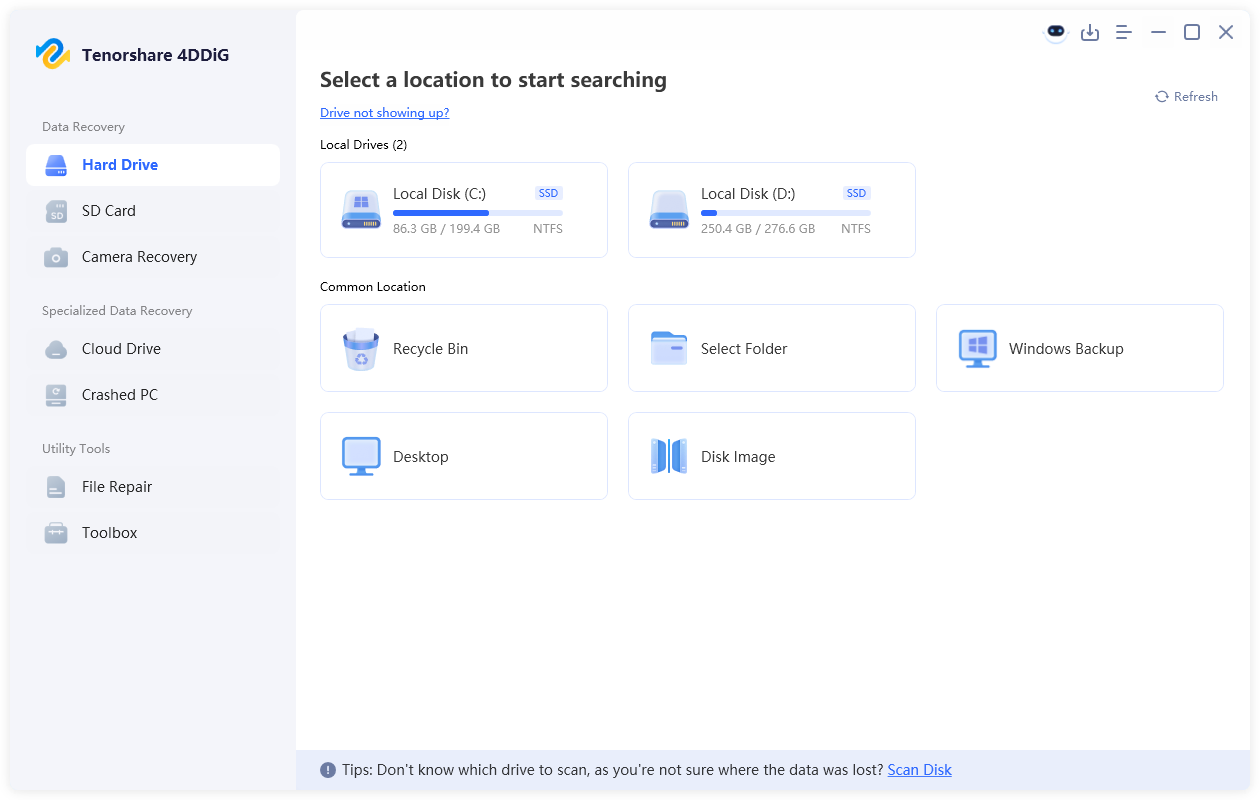
  • Download 4DDiG on your computer, then launch it after installation. From the home screen, choose the drive where your ripped music was stored to start scanning for lost files.

    launch 4ddig and enter interface
  • Wait for the scan to complete, then use the "Filter" and "Search" options to quickly find the lost music by file type, file name, or other available filters.

    click type to see all files 4ddig
  • Select the music files you want to restore and click the "Recover" button to start recovering them.

    preview and recover the files
  • Now, choose a different and more secure location to save the recovered music and click "Save Now".

    save the recoverable files
Important:

Do not save the recovered music files back to the drive where they were lost. Choose another drive or a safe location such as OneDrive or Google Drive to avoid overwriting recoverable data.

FAQs About Ripping Music from a CD

Is it legal to rip music from a CD?

It depends on the copyright laws in your country or region. Ripping a legally owned CD for personal use may be allowed in some places but restricted in others. Check your local copyright laws before copying or distributing copyrighted music.

Does ripping a CD delete the music?

No. Ripping a CD copies the audio tracks to your computer without deleting or changing the music on the original disc. You can continue playing the CD normally after ripping it.

Can I rip a CD without Windows Media Player?

Yes. You can rip a CD without Windows Media Player by using alternatives such as Exact Audio Copy or fre:ac. These tools can also provide additional options for lossless formats and ripping accuracy.

Should I rip CDs to MP3 or FLAC?

Choose MP3 for smaller files and broad device compatibility, or FLAC if you want lossless audio quality and do not mind larger files. MP3 is better for everyday listening and portability, while FLAC is better for preserving a high-quality music archive.

Where does ripped music go on Windows?

Music ripped with Windows Media Player is typically saved in your Music folder or library. You can check the ripping settings to find or change the current save location.

Where are imported CD songs stored on Mac?

CD songs imported with the Music app are added to your Music library and normally stored in the Music Media folder. To check the current file location, go to "Music > Settings > Files" and view the Media folder location.

Conclusion

Ripping music from a CD is easy with the right setup. On Windows, you can use Windows Media Player, while Mac users can import them with the Music app.

Once your CD collection is saved digitally, keep a backup of important music files. If the ripped tracks are accidentally deleted or lost, check your backups first or use a data recovery tool such as 4DDiG to try to recover them.

FREE DOWNLOAD

Secure Download

FREE DOWNLOAD

Secure Download

William Bollson (senior editor)

William Bollson, the editor-in-chief of 4DDiG, devotes to providing the best solutions for Windows and Mac related issues, including data recovery, repair, error fixes.

(Click to rate this post)

You rated 4.5 ( participated)