How to Fix Data Error Cyclic Redundancy Check?

Read on this guide to learn 5 methods to fix data error cyclic redundancy check error. To recover lost data from hard drive due to this error, just download Tenorshare 4DDiG data recovery tool!

5 mins read

Updated on 2026-08-03 17:25:25 to Hard Drive

The "data error (cyclic redundancy check)" occurs when Windows cannot verify the data read from or written to a storage device. This may prevent you from opening the drive, copying files, or initializing the disk.

If the device contains important data, avoid formatting or initializing it right away. Secure any accessible files first, then determine whether the error is caused by a connection issue, logical corruption, or potential hardware failure. This guide explains how to troubleshoot the error and choose the right fix for different situations.

data error cyclic redundancy check

What Is a Cyclic Redundancy Check Error?

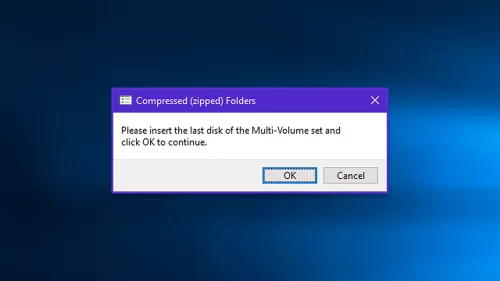
A cyclic redundancy check (CRC) error means Windows could not verify that the data read from or written to a storage device is accurate. However, the error itself does not indicate whether the problem comes from a connection issue, file system corruption, bad sectors, or hardware failure.

CRC is an error-detection method used by storage devices and computer systems to check whether data has changed or become corrupted. When data is written, the system generates a check value. When the data is accessed again, Windows recalculates the value and compares it with the original.

If the values do not match, Windows may display messages such as:

  • "Data error (cyclic redundancy check)"
  • "Drive is not accessible. Data error (cyclic redundancy check)"
  • "DiskPart has encountered an error: Data error (cyclic redundancy check)"
  • "Cannot copy file: Data error (cyclic redundancy check)"

The message only tells you that Windows cannot read or verify the data correctly. To find the actual cause, you need to check the affected device, connection, file system, and when the error occurs.

What Causes a Data Error (Cyclic Redundancy Check)?

A CRC error can happen when Windows tries to access an HDD, SSD, USB drive, memory card, or other storage device. It can also appear when checking downloaded files, archives, or software installers. Knowing when the error appears can help you find the right solution.

Causes Description
🔌 Loose Cable, Port, or Power Connection A loose USB cable, unstable port, or insufficient power supply can interrupt data transfer and cause CRC errors, especially with external drives.
📁 File System or Data Corruption Sudden shutdowns, interrupted transfers, or damaged file system information can stop Windows from reading data correctly.
💾 Bad Sectors or SSD Wear Bad sectors on an HDD or worn-out flash memory on an SSD can make some data unreadable and lead to CRC errors.
💾 Damaged Partition Information Corrupted partition information can make a drive show as "RAW," "unallocated," or "not initialized" in Windows.
📄 Corrupted Files or Storage Media Damaged files, failed transfers, or a faulty storage device can cause CRC errors when Windows tries to access the data.
Physical Drive or Controller Failure A failing drive may cause slow performance, frequent disconnects, unusual noises, or repeated CRC errors.

CRC errors are usually caused by connection problems, corrupted data, or drive issues. If the error keeps coming back or the drive becomes slow, unstable, or noisy, it may indicate a hardware problem.

How to Fix Data Error (Cyclic Redundancy Check)?

Start with the safer fixes first and move to more advanced repairs only when needed. If the drive contains important files, avoid actions that may change the data until you have a backup or recovery plan.


Fix 1: Reconnect the Device and Test the Connection

Connection issues are one of the safest things to check first, especially when the CRC error appears on an external HDD, SSD, or USB drive. A damaged cable, unstable port, insufficient power, or faulty enclosure can interrupt data transfer even when the drive itself is still usable.

  • Close any programs that are using the drive.

  • Safely disconnect the device and wait for about 10 seconds.

  • Reconnect it using another USB or SATA port if available.

  • Try a different cable if you have a replacement.

  • Avoid using unpowered USB hubs and connect the drive directly to your computer.

  • Test the device on another computer.

If the error disappears, the original cable, port, hub, or enclosure was likely causing the problem. Back up important files before continuing to use the device.

💡 Tip:

For external desktop hard drives, use the original power adapter when possible. A drive with unstable power may disconnect during large file transfers.

Fix 2: Recover Data Before Repairing the Drive

If the CRC error continues after checking the connection, recover important files before running repair tools. This is especially important when the drive is detected by Windows but files cannot be opened, copied, or accessed normally.

You can try 4DDiG Data Recovery to scan the affected drive and check whether your files are still recoverable. It can help recover data from drives with access errors without making changes to the original device.

FREE DOWNLOAD

Secure Download

FREE DOWNLOAD

Secure Download

Key Features of 4DDiG:

  • Recover files from inaccessible HDDs, SSDs, USB drives, SD cards, and other storage devices affected by CRC errors.
  • Recover files before formatting, running CHKDSK, or performing other repairs that may risk data loss.
  • Recover lost, formatted, or deleted files from damaged drives.
  • Support common file systems such as NTFS, FAT16, FAT32, exFAT, APFS, and HFS+.
  • Preview recoverable files before recovery and save restored data to another drive to avoid overwriting.

How to Recover Data from a Drive with CRC Error Using 4DDiG:

  • Connect the affected external device to your computer if you are recovering data from a USB drive, external HDD, or other removable storage. Then open 4DDiG and select the drive showing the CRC error.

    select a drive with a CRC error in 4DDiG
  • Let 4DDiG scan the drive for recoverable files. You can filter results by file type, search for specific files, and preview available data before recovery.

    preview files found by 4DDiG
  • Select the files you need and click "Recover."

    preview and recover files with 4DDiG
  • Save the recovered files to another healthy drive. Do not save them back to the drive with the CRC error.

    save recovered files to another drive

Fix 3: Run Windows Error Checking

Windows Error Checking provides a simple way to scan a drive for file system problems. It is useful when the drive is stable and the issue may be caused by a logical error.

  • Press Windows + E to open File Explorer, then select "This PC."

  • Right-click the affected drive and choose "Properties."

  • Open the "Tools" tab and click "Check" under "Error checking."

    error checking the drive
  • Select "Scan drive" if prompted and follow the instructions.

This method may fix logical file system errors. It cannot repair damaged cables, failing controllers, bad hardware, or physically damaged drives.

Fix 4: Run CHKDSK for File-System Errors

CHKDSK can help when the CRC error is caused by file system problems or bad clusters. Because some CHKDSK options make changes to the drive, recover important files before running repair commands.

According to Microsoft's CHKDSK documentation, the "/f" parameter fixes disk errors, while the "/r" parameter finds bad sectors and attempts to recover readable information.

  • Press Windows + S, search for "Command Prompt," and select "Run as administrator."

  • Enter chkdsk X: /f and replace "X" with your drive letter.

    run the chkdsk prompt
  • Press Enter and wait for the process to finish.

  • Review the result after CHKDSK completes.

    run CHKDSK to repair logical CRC errors
Warning:

Avoid running chkdsk X: /r first on a drive that clicks, disconnects, freezes, or becomes extremely slow. A long sector scan can add stress to a failing drive.

Fix 5: Check the Source File or Storage Media

If the CRC error only appears when opening an archive, installing software, or reading an optical disc, the problem may come from the source file or media instead of your destination drive.

  • Delete incomplete or corrupted files.

  • Download the file again from the official source.

  • Save the new file to another location and try again.

  • Verify the checksum if the publisher provides one.

  • For optical discs, clean the disc and test it on another drive.

Fix 6: Run SFC to Repair Windows System Files

SFC is designed to repair protected Windows system files. Use it only when the CRC error happens during Windows operations or software-related tasks, not as a general repair tool for external drives or personal files.

  • Press Windows + S, search for "Command Prompt," and select "Run as administrator."

  • Enter sfc /scannow and press Enter.

    run sfc scannnow command
  • Wait until the scan reaches 100% and restart Windows if repairs are completed.

Fix 7: Format or Replace the Device

Formatting rebuilds the file system and may fix some logical problems, but it removes access to existing data. Use it only after recovering important files and confirming that the device does not have signs of physical failure.

Warning:

Formatting does not repair failing hardware and may make data recovery more difficult. Double-check the selected drive before continuing.

  • Press Windows + X and select "Disk Management."

  • Find the correct volume, right-click it, and select "Format."

    use disk management to format a usb
  • Choose the file system and volume label.

  • Confirm that no important files remain, then start the format.

Do not continue using a drive that keeps showing CRC errors after formatting.

What If the Drive Shows RAW, Unallocated, or Not Initialized?

In some cases, a CRC error may cause the drive to appear as RAW, unallocated, or not initialized in Disk Management. This usually happens when Windows cannot read the drive's file system or partition information properly.

If the drive contains important files, do not initialize, format, or create a new partition immediately. These actions can change the drive structure and make it hard to recover data.

The Drive Is Not Initialized

Windows may ask you to initialize a disk when it cannot recognize the existing partition information. If the drive was used before and contains files, cancel the prompt instead of initializing it right away.

Check whether Windows detects the correct drive capacity and whether the device remains stable. If the drive is still accessible, recover important files before making any changes.

Warning:

Initializing a disk does not restore lost files or partitions. It creates new disk information and may reduce the chances of successful recovery.

The Drive Shows as RAW or Unallocated

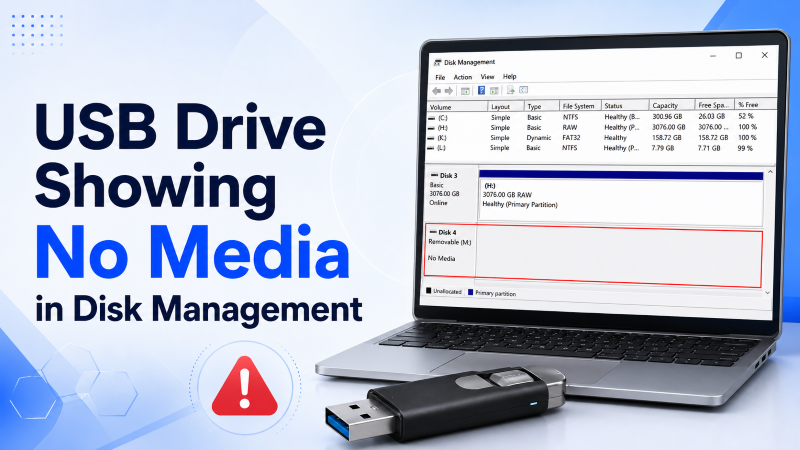
A CRC error can also appear when Windows cannot read the file system or partition information correctly. In Disk Management, the drive may show as RAW or unallocated instead of displaying the original volume.

If the drive contains valuable data, avoid creating a new volume or formatting it. Recover your files first, then repair the drive after your data is safe.

📝 Note:

Unallocated space does not always mean the drive is empty. The original files may still exist if the partition information is damaged.

The Drive Has No Letter

A missing drive letter can stop a volume from appearing in File Explorer even when the partition is still there. Open Disk Management to check whether Windows detects the volume correctly.

If the volume looks healthy, assigning a new drive letter may restore access. If the drive appears as RAW, unallocated, or cannot be opened, recover important data before changing the partition settings.

When Should You Consider Professional Data Recovery?

Some CRC errors are caused by connection issues or file system problems that can be fixed at home. However, repeated errors may also indicate a failing drive. Consider professional recovery when the device is unstable or your files are too important to risk further damage.

  • The drive has suffered physical damage, such as a drop, impact, liquid exposure, or electrical damage.
  • The HDD makes clicking, grinding, or unusual noises.
  • Drives like the SD card shows the wrong capacity or displays the drive as 0 bytes.
  • The device disconnects repeatedly during access or scanning.
  • Multiple computers cannot detect the drive properly.
  • Recovery software cannot complete a scan without freezing or crashing.
  • The files are irreplaceable and no backup is available.
Warning:

Do not open a hard drive enclosure yourself. Internal drive repairs require specialized equipment and a controlled environment that cannot be recreated at home.

How to Reduce the Risk of Future CRC Errors

  • Keep Regular Backups: Save important files to another storage device or cloud service. A backup allows you to restore your data if the original drive becomes damaged or inaccessible.

  • Safely Remove External Drives: Always safely eject USB drives and external storage before unplugging them. Removing a device while data is being transferred may cause file system corruption.

  • Avoid Interrupting Data Transfers: Do not force a shutdown or restart while files are being written. Interrupted operations can leave files incomplete or corrupted.

  • Protect Storage Devices: Keep drives away from drops, strong vibration, excessive heat, and moisture. Physical damage can cause read errors and repeated CRC failures.

  • Replace Damaged Cables: Faulty USB or SATA cables can interrupt data transfer and trigger CRC errors. Replace cables that are loose, worn, or unreliable.

  • Use a Stable Power Supply: External hard drives may disconnect or fail during data transfers if they do not receive enough power. Use the original adapter or a suitable power source when needed.

Conclusion

A "data error (cyclic redundancy check)" can result from connection issues, corrupted data, or drive problems. The best approach is to protect important files first and avoid actions that may make data recovery harder.

If the drive is detected but files cannot be accessed, Tenorshare 4DDiG can help scan and recover files before further repairs. Give it a shot!

FREE DOWNLOAD

Secure Download

FREE DOWNLOAD

Secure Download

FAQs

1. Can CHKDSK fix a CRC error without deleting files?

CHKDSK can fix some file system errors without intentionally deleting files, but it changes the drive during the repair process. It cannot fix physical damage, so back up or recover important files before running it.

2. Does a CRC error mean my hard drive is failing?

Not always. A CRC error can be caused by a bad cable, connection issue, corrupted data, or file system problem. However, repeated errors with slow performance, disconnects, or unusual noises may indicate a failing drive.

3. Why does the CRC error affect only one file?

The file may be corrupted, or the part of the drive where it is stored may have a read problem. Try opening or copying other files to see whether the issue is limited to that file.

4. Can formatting fix a cyclic redundancy check error?

Formatting can fix some logical file system problems, but it deletes existing data and cannot repair hardware damage. Recover important files first, and replace the drive if CRC errors continue after formatting.

William Bollson (senior editor)

William Bollson, the editor-in-chief of 4DDiG, devotes to providing the best solutions for Windows and Mac related issues, including data recovery, repair, error fixes.

(Click to rate this post)

You rated 4.5 ( participated)