How to Fix The Parameter Is Incorrect on External Hard Drive
When you connect an external hard drive, SD card, USB drive, or other storage media to a Windows 11/10 computer, you may see the error message "The parameter is incorrect".
This error can prevent you from opening the drive or accessing its files. If it’s not fixed in time, it may even result in data loss. In this guide, we’ll walk you through effective steps to resolve the issue and restore normal access to your storage device.
Overview of The Parameter Is Incorrect Error
What Does “The Parameter Is Incorrect" Mean?
"The parameter is incorrect" means your operating system is attempting to access data on a storage device but can’t complete the request correctly. The device is still detected, but it isn’t receiving the proper parameters needed to locate and read your files, which prevents Windows 10/11 from opening the drive or its folders.
This issue can occur with many types of storage devices, including external hard drives (HDDs and SSDs), SD cards, and USB flash drives.
Causes of “The Parameter Is Incorrect" Error
Now, let’s take a closer look at why it occurs. Below are the most common reasons this error appears when accessing a storage device:
- File system corruption: The error may occur when the file system on the hard drive or storage device becomes corrupted or damaged.
- Improper device removal: Safely ejecting a storage device incorrectly or unplugging it while it’s in use can cause access issues.
- Outdated software or drivers: If your operating system or drivers are outdated, it can result in compatibility issues and trigger this error.
- Faulty USB connection: A loose or faulty USB connection between the device and the computer can result in the error message.
- Hardware issues: Physical damage or malfunctions in the hard drive or storage device can cause the error to occur.
Quick Tips to Fix Drive Is Not Acessible The Paramater Is Incorrect
Before trying advanced solutions, here're some quick tips. In many cases, this paramater is incorrect on external hard drive error is connection-related, and you can regain access to your storage device instantly with these simple checks.
- Switch to a different USB port: Some USB ports stop working properly or do not provide enough power. Plug the drive into another port that you know works. USB 3.0 ports are better because they supply more power.
- Replace or check the USB cable: A loose or damaged cable can cause the drive to disconnect on and off. This can trigger errors and even corrupt data.
- Try another computer: Connect the drive to a different PC to see if the same error appears. This helps confirm whether the problem is with the drive or your computer.
Doing these simple checks first can save time. In many cases, this error happens because the drive is not getting enough power from the USB port or a USB hub. If they didn't work, move on to advanced solutions.
⚡ Act Fast: Recover Data from an External Hard Drive First
Before you start fixing “The parameter is incorrect on hard drive” error, it’s crucial to recover any important data from the affected drive. Attempting repairs without securing your files first can lead to permanent loss.
The easiest way to do this is use 4DDiG Data Recovery, a powerful tool designed to retrieve files from inaccessible or damaged drives. Whether your data was lost due to this error, accidental deletion, or formatting, 4DDiG can help you safely recover your files before you move on to repairing the drive.
Below are some key features of 4DDiG that you may value:
- Supports multiple storage devices: Works with external hard drives (WD, Seagate, Toshiba, Samsung, SanDisk, LaCie, Buffalo and Transcend...), SSDs, USB flash drives, SD cards, memory cards, digital cameras and more.
- Wide file format support: Recovers 2,000+ file formats, including documents, photos, videos, audio files, and more.
- Recovers from inaccessible drives: Can retrieve files even when the drive cannot be opened or shows errors.
- Handles various data loss scenarios: Supports recovery from accidental deletion, formatting, corruption, or system errors.
- Preview before recovery: Allows you to view recoverable files before restoring them.
- Safe recovery: Recovers data without overwriting existing files on the drive.
Secure Download
Secure Download
This is how to recover data from an external hard drive with the “The parameter is incorrect” message:
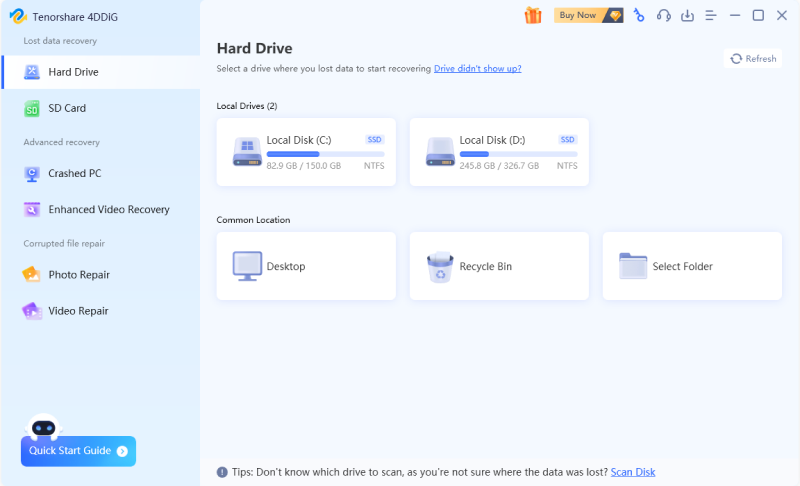
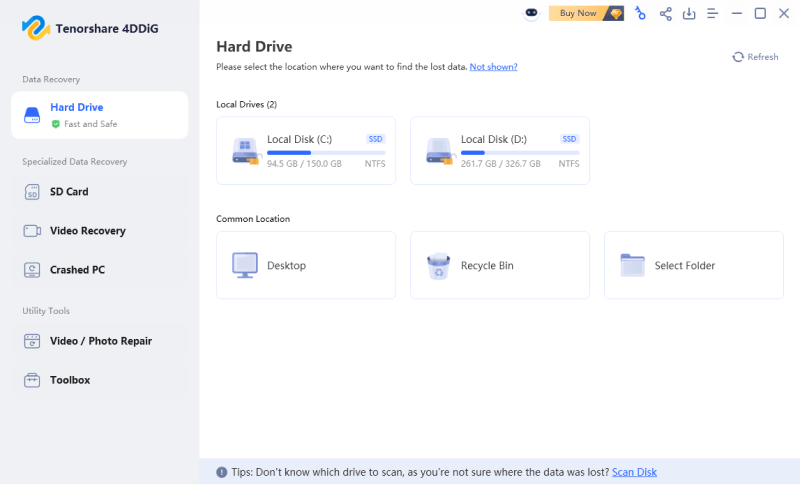
- Download and install 4DDiG on your computer and then launch it. Go to "Hard Drive", then select "Disk Image”.
- Now, select to create a new image with 4DDiG, you can skip this step but it's best to create a backup and scan that instead of using the problematic drive.
- Select the drive or partition for creating its disk image.
- When it's done, go back to the recovery page. Click "Recover Data from Image" to choose the disk image you just created and 4DDiG will automatically import it for file recovery.
- When the software finishes scanning, you can preview the files to check the results. Click the “Recover" button and save the recovered files to another location.
Creating a disk image first is recommended because it makes an exact copy of your entire drive, including all files, system information, and hidden sectors. This way, you can safely work on the copy instead of the original drive, reducing the risk of further data loss or corruption while troubleshooting or repairing the drive.
How to Fix The Parameter Is Incorrect on External Hard Drive?
Once you’ve safely recovered your important data from the external hard drive showing this error, the next step is to fix the issue. The section below provides step-by-step methods to resolve this “The parameter is incorrect” error and restore your storage device to proper working condition.
1 Perform an Error Checking
The first step in fixing the “The parameter is incorrect” error is to use Windows’ Error Checking tool. This tool scans your drive for problems like damaged files or small errors that stop Windows from reading it properly. It can fix many of these issues automatically and often lets you access your files again without losing any data.
Here's how to run an error checking with Windows' built-in tool:
- Open File Explorer, right-click the affected hard drive, then choose "Properties" from the context menu.
- Navigate to the "Tools" tab and press the "Check" button.
- To proceed, click "Scan and repair drive" for the tool to start scanning and fixing your drive.
2 Adjust Decimal Settings
Another way to fix the error is to adjust your decimal settings. Sometimes Windows misreads a drive’s size or format if the system’s number settings don’t match the standard. By updating these settings, you can help Windows detect the drive correctly and regain access to your files.
Here's how you can fix the decimal symbol in region settings on Windows 10/11:
- Click the Start button, type “Control Panel” in the search box, and open it.
- Select “Change date, time, or number formats.”
- Click “Additional settings” and make sure the Decimal symbol is set correctly, usually a period (.). Then click Apply.
3 Update Drive and USB Driver
Sometimes, Windows can’t read a drive correctly because the disk or USB drivers are outdated or damaged. Updating these drivers can fix communication problems between your PC and the storage device, letting you access your files again. Here's how to do.
- Press Windows + X and select "Device Manager" from the menu.
- Expand Disk drives to locate your external drive, or expand Universal Serial Bus controllers for a USB device.
- Right-click the device and choose "Update driver".
- Select "Search automatically for drivers". Windows will look for the latest driver online and install it if available.
- After the update completes, restart your computer to apply the changes.
4 Run CHKDSK
Another effective method to resolve the drive is not accessible and the parameter is incorrect issue on your hard drive is by running the CHKDSK (Check Disk) utility. CHKDSK is a built-in Windows tool that scans and repairs file system errors and bad sectors on the hard drive. Follow these steps to run CHKDSK:
- Take note of the drive letter of the affected disc before proceeding. In this tutorial, we'll use the File Explorer to scan the USB Drive labeled F.
- From the Start menu, search for Command Prompt and run it as administrator.
- In the window, run the prompt:
chkdsk /f /r
- The utility will run the command and scan the drive for errors and bad sectors; this may take a few minutes depending on the size of the disc and the number of files on it.
- Following the scan, the ChKDSK tool will notify you if it discovered a problem or bad sectors.
5 Run SFC Scan
The “Parameter is incorrect” error on an external hard drive often happens when important system files on your computer are missing or corrupted.
System File Checker (SFC) is a built-in Windows tool that can scan for these damaged files and automatically repair them, helping your system run properly and restore access to your drive. Steps are listed below.
- Open Windows Command Prompt, input
SFC /scannowin the window and hit Enter.
- Wait while Windows scans your system files. This may take several minutes.
- Once the scan is complete, review the results. SFC will automatically repair any corrupted or missing files it finds.
6 Use DISM.exe
If the “Parameter is incorrect” error persists after running CHKDSK or an SFC scan, the problem might be due to corrupted Windows system files rather than the external drive.
Windows includes a tool called DISM (Deployment Image Servicing and Management) that can scan for these issues and automatically repair or restore any missing or damaged system files. Here’s how to use DISM:
- Launch Command Prompt in Administrator mode.
- Run
DISM.exe /Online /Cleanup-image /scanhealth
- Wait for the process to complete, and then attach the outer driver, users should have no problems.
7 Format the Drive
If all the previous methods fail, formatting the drive is the most reliable solution. Formatting essentially resets the drive by creating a new file system on its partition, which eliminates any logical issues from the old one.
Keep in mind that this process will erase all data on the drive, so make sure you’ve backed up or recovered your important files first. Below, we’ll show you how to safely format the drive using DiskPart.
- Go to the Start Menu, type "cmd," right-click on it and select “Run as administrator."
- Type DiskPart" in the cmd and hit Enter.
- Type
List Diskin the cmd to show all the available disks. - Now, note the disk number of your SD card, type
select disk X, replace X with your drive letter and hit Enter to run the command. - Type the command
Cleanand proceed to run it to erase everything on the external hard drive.
- Now, type
create partition primaryand press Enter. - Type "active" and press Enter.
- Type the command
format fs=ntfsand hit the "Enter" button to assign a file system to the SD Card.
- Finally, assign a letter to your SD card by typing the command
assign letter=Fto choose a letter to your drive.
Conclusion
In conclusion, fixing the “The parameter is incorrect” error is essential to regain access to your external hard drive and the valuable data on it. By following the steps in this guide, you can troubleshoot and resolve the issue effectively.
If you want a faster and more reliable way to recover lost or inaccessible files, Tenorshare 4DDiG offers a comprehensive solution. It can help retrieve data from your drive, whether it’s affected by this error, accidental deletion, formatting, or other data loss situations.
Secure Download
Secure Download
💡 Summarize with AI:
You May Also Like
- Home >>
- Hard Drive >>
- How to Fix The Parameter Is Incorrect on External Hard Drive
ChatGPT
Perplexity
Grok