How to Fix Windows Has Stopped This Device Because It Has Reported Problems Error 43?

5 mins read

Updated on 2026-08-24 15:14:41 to USB Recovery

"Windows has stopped this device because it has reported problems. (Code 43)" appears when a device driver reports that the connected hardware is not working properly. It can affect USB drives, graphics cards, Bluetooth adapters, and other devices, but it does not always mean the hardware is permanently damaged.

To fix Windows Code 43, first identify the affected device in Device Manager. Then check its connection and restart the computer before trying driver or system-level fixes.

This guide will help you troubleshoot Code 43 in the safest order, determine whether the cause is software or hardware, and protect your data when the affected device is a USB drive or external storage device.

windows has stopped this device because it has reported problems code 43

What Does Windows Code 43 Mean?

Windows Code 43 is a Device Manager error. It appears when a driver controlling a device tells Windows that the device has failed in some way. According to Microsoft's official Device Manager error code documentation, Code 43 reports a general device failure. It does not identify the exact cause.

▼The error may affect:

  • USB flash drives and external hard drives
  • Graphics cards
  • Bluetooth adapters
  • Network adapters
  • Cameras and mobile devices
  • Other internal or external peripherals

▼To confirm Code 43:

  • Right-click "Start" and select "Device Manager".

  • Find the device with a yellow warning icon.

  • Right-click the device and select "Properties".

  • Check the message under "Device status" on the "General" tab.

▼Common causes behind Windows has stopped this device Code 43 include:

CauseExamples
Connection problemLoose cable, damaged USB port, faulty connector, or unpowered USB hub
Driver problemCorrupted, outdated, incompatible, or recently updated driver
Power problemInsufficient USB power or a setting that turns off the device
System conflictRecent Windows update, damaged system setting, or software conflict
Firmware problemOutdated or incompatible device firmware or system BIOS
Hardware failurePhysical damage or a failing internal component
📝 Note:

Code 43 does not automatically mean that the device is permanently damaged. Check the connection and driver before concluding that the hardware has failed.

⚡ Before Fixing Code 43: Identify the Device Type and Protect Your Data

Before fixing Code 43, identify the affected device first. Storage devices may require data protection before repairs, while other hardware usually needs driver or system troubleshooting.

For USB Drives and External Storage

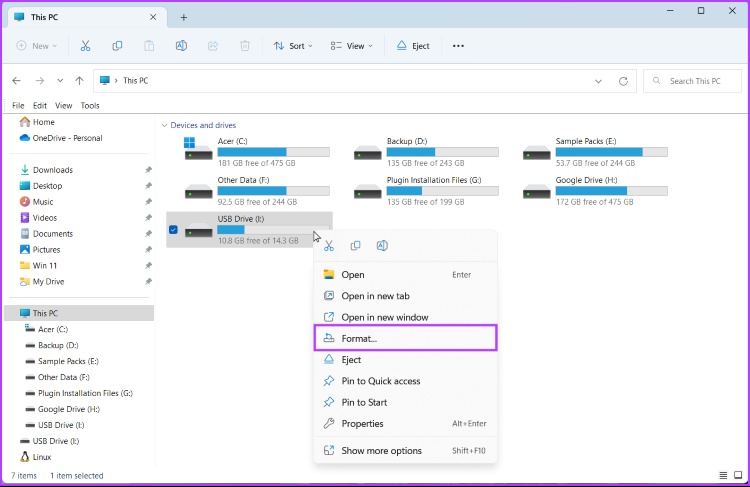
If Code 43 affects a USB drive or external storage device, check whether it appears in "File Explorer" or "Disk Management". If important files are stored on it, protect the data before trying repairs.

Warning:
  • Do not format or initialize the affected drive.
  • Do not copy new files to the device.
  • Avoid repeated repair attempts before securing important files.
  • Do not save recovered files back to the same drive.
  • Stop using the device if it clicks, overheats, or disconnects repeatedly.

When software recovery may be possible:

Code 43 does not always mean your files are lost. If Windows can still detect the storage device but you cannot access its contents, the problem may be related to driver errors, file system corruption, or other logical storage issues. In this case, recovery software may help before further repairs.

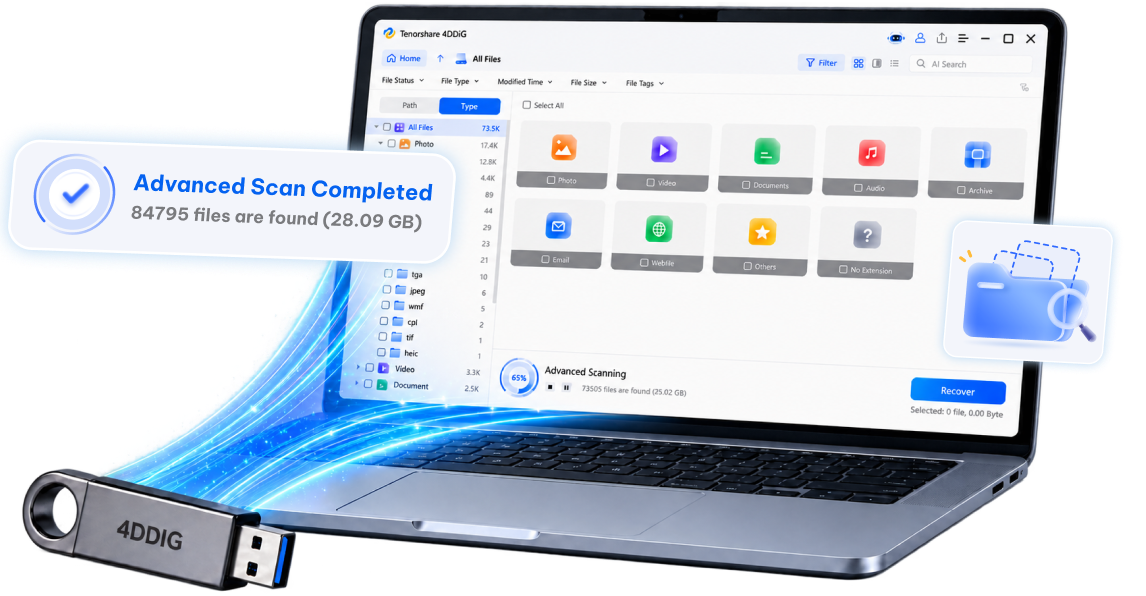
4DDiG Data Recovery can scan detected USB drives, SD cards, and external storage devices for lost, inaccessible or deleted files, including photos, videos, documents, and over 2,000 other file types.

You can use 4DDiG when:

  • The USB drive appears in Disk Management but not File Explorer.
  • Windows detects the device but cannot open its files.
  • The drive shows file system errors or cannot be opened.
  • The device appears as an available scan location in 4DDiG.
  • Files became inaccessible after a driver, connection, or logical storage problem.
FREE DOWNLOAD

Secure Download

FREE DOWNLOAD

Secure Download

How to recover data from a code 43-affected device with 4DDiG:

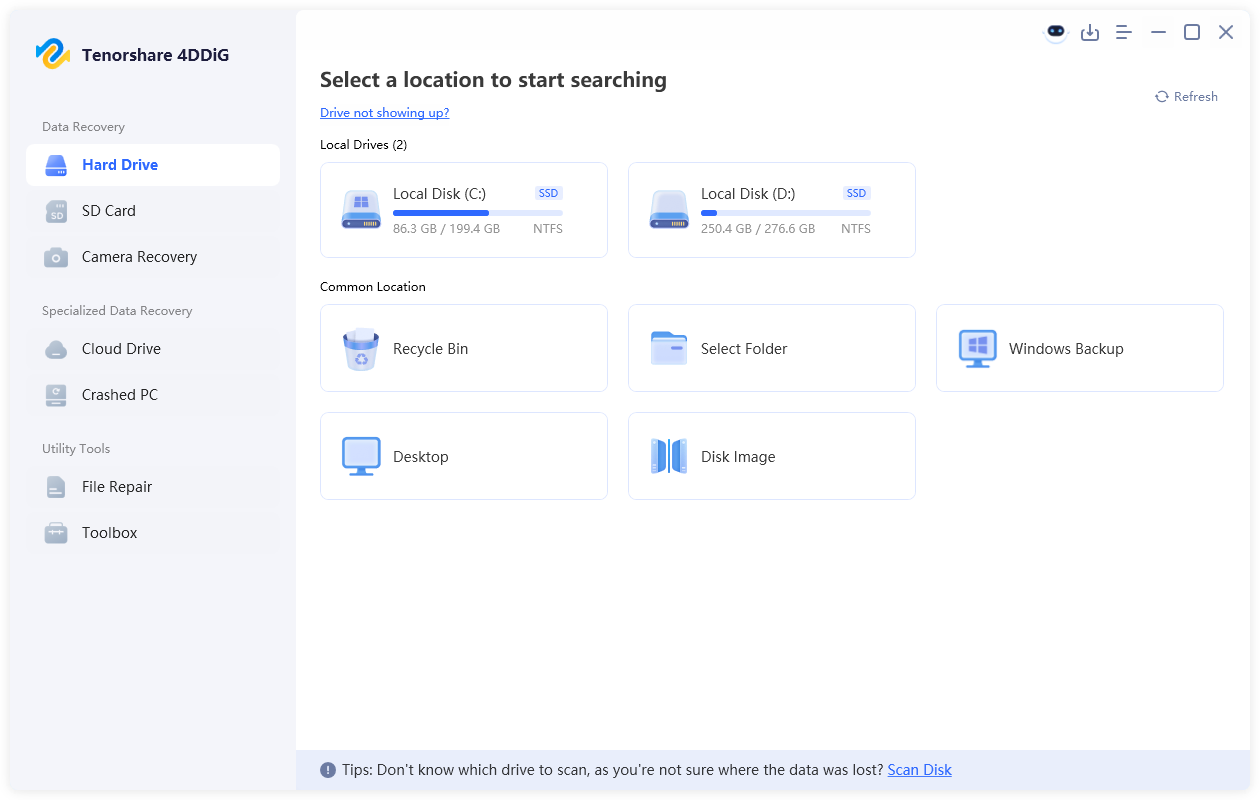
  • Install and launch Tenorshare 4DDiG on a working Windows computer. Connect the Code 43-affected external storage device, then select it as the scan location.

    launch 4ddig and select code 43 affected drive
  • Start the scan and wait for 4DDiG to find deleted or inaccessible files. Use Filters or Search to locate the files you need.

    scan code 43 affected drive with 4ddig
  • Preview the found files before recovery to confirm they are available. Select the important files affected by the Code 43 issue and click "Recover".

    preview and recover files from code 43 device
  • Save the recovered files to another healthy drive. Avoid saving them back to the affected device to prevent possible data overwriting.

    save recovered files from code 43 device
📝 Note:

If the USB drive does not show up, repeatedly reconnecting or scanning it is unlikely to resolve a physical communication failure. Consider professional recovery if the missing files are irreplaceable.

For Graphics Cards, Bluetooth, and Other Devices

Data recovery is usually not involved when Code 43 affects a graphics card, Bluetooth adapter, network adapter, or other hardware devices that do not store personal files. These cases usually require driver, system, or hardware troubleshooting instead.

For these devices:

  • Note the device name and category in Device Manager.

  • Check whether the error started after a driver or Windows update.

  • Restart the computer.

  • Follow the general driver methods below.

  • Use the computer or hardware manufacturer's driver if the generic Windows driver does not help.

Important:

Do not use USB Root Hub or external-drive instructions for a graphics card or Bluetooth adapter unless that device is connected through USB.

How to Fix Windows Has Stopped This Device Code 43?

Windows Code 43 is usually caused by a device driver, connection problem, hardware issue, or system compatibility error. Start by checking the affected device in Device Manager and confirm whether Windows can still detect it.

1 Restart the Computer and Reconnect the Device

A restart can clear temporary driver or connection issues that trigger Code 43. Try this method before changing drivers or system settings.

For an external device:

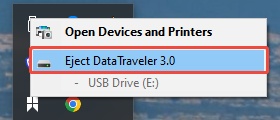
  • Safely disconnect the affected device.

  • Disconnect other unnecessary USB devices.

  • Shut down the computer completely.

  • Wait briefly and turn the computer back on.

  • Reconnect only the affected device.

  • Open Device Manager and check its status.

For an internal device, such as a graphics card or built-in Bluetooth adapter, restart the computer without opening the case. Continue to the next method if Code 43 returns.

2 Test Another Port, Cable, or Computer for External Devices

Testing another connection helps determine whether the issue comes from the device, cable, port, or computer. This method applies to USB drives, external hard drives, cameras, and other removable devices.

  • Connect the device to another compatible port.

  • On a desktop computer, try a rear USB port connected directly to the motherboard.

  • Avoid unpowered USB hubs, extension cables, and switches.

  • Test another compatible cable if the device uses a detachable cable.

  • Connect the device to another computer if one is available.

If the device works on another computer, the issue may be related to the original PC. If it fails with different ports, cables, and computers, the device itself may have a hardware problem.

3 Disable and Re-enable the Device

Disabling and re-enabling a device forces Windows to initialize it again. Try this when the affected hardware remains visible in Device Manager.

  • Right-click "Start" and select "Device Manager".

  • Expand the category containing the affected device.

  • Right-click the device and select "Disable device".

    disable device under device manager
  • Select "Yes" to confirm. Then wait a few seconds.

  • Right-click the device again and select "Enable device".

  • Open "Properties" and check the Device status.

Update or reinstall the driver if Code 43 immediately returns.

4 Update the Device Driver

Updating the drivers may fix Code 43 when the current driver is corrupted, outdated, or incompatible with Windows.

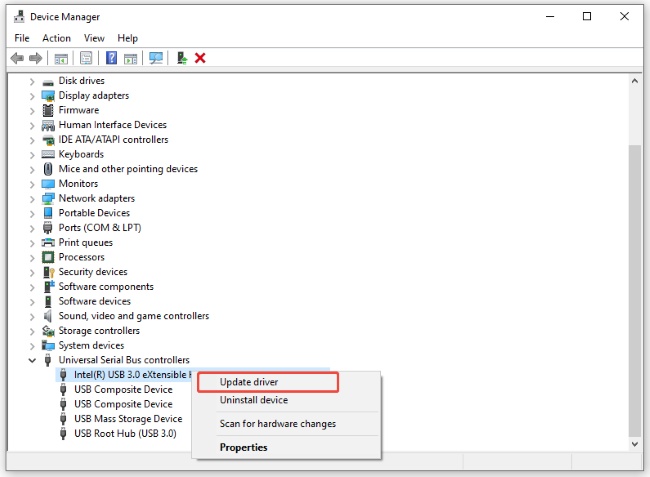
  • Open "Device Manager".

  • Find and right-click the affected device under "Disk drives".

  • Select "Update driver".

    update usb driver device manager
  • Select "Search automatically for drivers".

    search automatically for drivers device manager
  • Install any available driver.

  • Restart the computer.

If Windows does not find a newer driver, visit the support website for your computer or device manufacturer. Download a driver that matches the exact device model and Windows version.

For a laptop graphics card, start with the driver provided by the computer manufacturer. Laptop manufacturers may customize graphics drivers for a specific device configuration.

5 Roll Back a Recent Driver Update

Roll back the driver if Code 43 appeared immediately after a driver update. This replaces the current driver with a previous version saved by Windows.

  • Open "Device Manager".

  • Right-click the affected device and select "Properties".

  • Open the "Driver" tab and select "Roll Back Driver".

    roll back usb driver
  • Choose a reason and follow the prompts.

  • Restart the computer.

If "Roll Back Driver" is unavailable, Windows may not have retained the previous version. Check the manufacturer's support website for an earlier compatible driver or reinstall the current driver.

6 Uninstall and Reinstall the Device Driver

Reinstalling a device driver can remove a damaged driver configuration. Microsoft lists manual driver reinstallation as a recommended Code 43 resolution.

  • Open "Device Manager".

  • Expand the "Disk drives".

  • Right-click the device and select "Uninstall device".

    uninstall usb in device manager
  • Confirm the removal.

    confirm to uninstall usb
  • Restart the computer, or select "Action > Scan for hardware changes" in Device Manager.

    scan pc for hardware changes
  • Allow Windows to reinstall the device.

  • Open "Properties" and check the Device status.

7 Install Windows Updates

Windows updates may include compatibility fixes and newer device drivers. Try this method if Code 43 appears after a Windows compatibility issue or when updates are pending.

On Windows 11:

  • Press Windows + I.

  • Select "Windows Update".

  • Click "Check for updates" to install available updates.

    install latest windows update
  • Open "Advanced options > Optional updates" and check for available driver updates.

  • Restart the computer.

On Windows 10:

  • Open "Settings".

  • Select "Update & Security > Windows Update".

  • Click "Check for updates", confirm the action and wait for the update to complete.

    windows-check-for-updates-usb-drivers
  • Restart the computer.

If Code 43 started after a driver update, try rolling back the driver instead of installing another version.

8 Adjust USB Power Management Settings

Use this method only for USB devices. Windows may turn off USB Root Hubs to save power, which can interrupt communication with the connected device.

  • Open "Device Manager" then expand "Universal Serial Bus controllers".

  • Double-click "USB Root Hub" or "Generic USB Hub".

  • Open the "Power Management" tab.

  • Disable "Allow the computer to turn off this device to save power".

    allow the computer to turn off this device to save power
  • Click "OK".

  • Repeat the steps for other relevant USB hub entries.

  • Restart the computer and reconnect the USB device.

📝 Note:

Not every computer displays the Power Management tab. Skip this method if the option is unavailable.

9 Use System Restore After a Recent System Change

Use System Restore when Code 43 starts after a driver, application, or Windows configuration change. It returns system files and settings to an earlier restore point.

System Restore does not remove personal files, but it may remove recently installed applications and drivers. So, save your work and close open applications before starting.

  • Search Windows for "Create a restore point" and open it.

  • Under "System Protection", select "System Restore".

    restore system to fix missing taskbar
  • Click "Next" to choose a restore point created before Code 43 appeared.

  • Select "Scan for affected programs" to review possible changes.

  • Follow the prompts to begin the restoration.

Use System Restore only when a suitable restore point exists and Code 43 started after a recent system change.

10 Update BIOS or Device Firmware Only When Recommended

Do not update the BIOS as an early Code 43 fix. Update BIOS or device firmware only when the computer or hardware manufacturer provides a compatible update for your model.

To check the current BIOS version:

  • Press Windows + R.

  • Type msinfo32 and press Enter.

  • Find "BIOS Version/Date" in System Information.

  • Compare it with the version listed for your exact computer or motherboard model.

Warning:

A failed BIOS update can prevent the computer from starting. Follow the manufacturer's instructions, use stable power, and do not interrupt the update.

Contact the manufacturer if you cannot confirm that the update applies to your hardware.

How to Tell Whether Code 43 Is a Hardware Failure?

Hardware failure becomes more likely if the device still fails after testing different ports, cables, computers, and the correct driver.

However, Code 43 alone does not confirm physical damage. If driver troubleshooting does not resolve the issue, check the manufacturer's documentation or contact support.

Use this checklist:

  • Try another compatible port.
  • Connect the device directly instead of through a hub.
  • Test another compatible cable.
  • Test the device on another computer.
  • Reinstall the manufacturer-supported driver.
  • Check for an official diagnostic tool.
  • Check for a relevant firmware update.
  • Inspect the device for damage, excessive heat, or unusual sounds.

For graphics cards, also check that all required power connectors are connected and that the power supply meets the GPU requirements.

Important:

Do not open a laptop, external drive, or device under warranty unless the manufacturer instructs you to do so.

If the device fails on another computer or fails an official diagnostic test, contact the manufacturer about repair or replacement. If the device stores important files, recover the data before replacement or destructive repairs.

FAQs About Windows Code 43

Does Code 43 mean the device is permanently damaged?

No. "Windows has stopped this device because it has reported problems. (Code 43)" does not confirm permanent damage. It means Windows detected a problem reported by the device driver. The cause may be a temporary connection issue, corrupted driver, incompatible update, insufficient USB power, or hardware failure.

How do I fix Code 43 on a USB device?

To fix USB Code 43, restart the computer, reconnect the device directly to another USB port, and test a different cable if available. Then update or reinstall the USB device driver and check USB power management settings.

If the USB device fails on multiple computers, it may have a hardware problem and require repair or replacement.

How do I fix graphics card Code 43?

To fix graphics card Code 43, restart the computer and install the graphics driver recommended by the GPU or computer manufacturer. If the error started after a driver update, roll back the driver or reinstall the current driver.

Also check the graphics card power connections and use the manufacturer's diagnostic tools if the error continues.

How do I fix Bluetooth Code 43 in Windows 11?

To fix Bluetooth Code 43 in Windows 11, restart the computer, disable and re-enable the Bluetooth adapter in Device Manager, and install the latest compatible Bluetooth driver from the manufacturer or Windows Update.

If the error started after a driver update, try rolling back the driver. For USB Bluetooth adapters, also test another USB port.

Can data recovery software access a drive with Code 43?

Yes, but only when Windows or recovery software can still detect and communicate with the drive. In this situation, recovery software may scan the device for lost or inaccessible files.

If the drive is completely undetected or has physical damage, software recovery may not work and professional recovery may be required.

Conclusion

When you see "Windows has stopped this device because it has reported problems. (Code 43)," the cause may be related to a driver, connection, compatibility, or hardware issue. The right solution depends on whether Windows can still detect the device and whether the problem is software or physical failure.

If Code 43 affects a USB drive or external storage device with important files, avoid formatting or advanced repairs until the data is secured. 4DDiG can help scan detectable devices for recoverable files before further troubleshooting or replacement.

FREE DOWNLOAD

Secure Download

FREE DOWNLOAD

Secure Download

William Bollson (senior editor)

William Bollson, the editor-in-chief of 4DDiG, devotes to providing the best solutions for Windows and Mac related issues, including data recovery, repair, error fixes.

(Click to rate this post)

You rated 4.5 ( participated)